
Oil production in Alaska reaches lowest level in more than 40 years
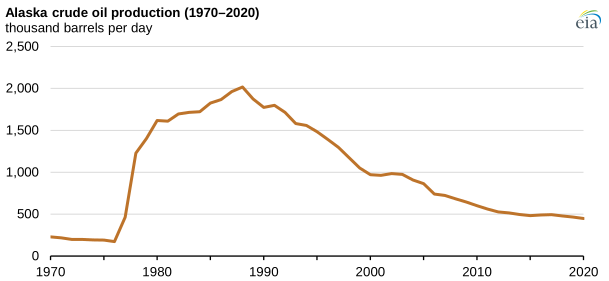
Crude oil production in Alaska averaged 448,000 barrels per day (b/d) in 2020, the lowest level of production since 1976. Last year's production was over 75% less than the state’s peak production of more than 2 million b/d in 1988. Production declined in 28 of the 32 years since Alaska’s oil production peak as the state’s oil fields have matured. The 4% decrease in annual oil production in Alaska in 2020 was part of a larger decline in U.S. oil production.
The Trans-Alaska Pipeline System transports crude oil from the North Slope of Alaska to Valdez on Alaska’s southern coast. Pipeline deliveries have decreased because of less production. Lower oil volumes cause oil to move more slowly in the pipeline, and the travel time for oil from the North Shore to Valdez has increased from 4.5 days in 1988 to 18 days in 2020.
Many areas of the state have not been explored for oil, including the Arctic National Wildlife Refuge (ANWR). Located in the northeastern part of the state, the ANWR likely holds 10.4 billion barrels of crude oil, according to U.S. Geological Survey estimates. In January 2021, the Biden administration, in an executive order, imposed a temporary moratorium on federal oil and natural gas leasing in the ANWR.
The oil industry is the largest contributor to Alaska’s economy despite the decline in production. Alaska has no state income or sales tax but relies instead on revenues from the oil and natural gas industry. Oil revenues supplied more than two-thirds of the state's budget in 2020. Although Alaska relies on the oil and natural gas industry for its revenue base, production in the state makes up only 4% of all oil production in the United States. Since 1982, every eligible state resident has received an annual dividend from the Alaska Permanent Fund, which manages royalties the state receives from its mineral rights, primarily oil.
Alaska has the third-highest petroleum demand per capita of any state. In 2020, Alaska consumed more petroleum for electricity generation than any state except Hawaii. Petroleum accounted for 16% of the state’s utility-scale generation, the third most of any generation source behind natural gas (38%) and hydroelectric power (31%). One-third of the state’s households rely on petroleum products such as fuel oil, kerosene, or propane for heating.
Additional state-level analysis for all types of energy is available in our State Energy Portal.
Principal contributor: Brett Marohl
Tags: production/supply, oil/petroleum, states, Alaska