U.S. Energy Information Administration logo
Skip to sub-navigation
In-brief analysis
January 29, 2026

Petroleum electricity generation surpassed natural gas in New England during winter storm
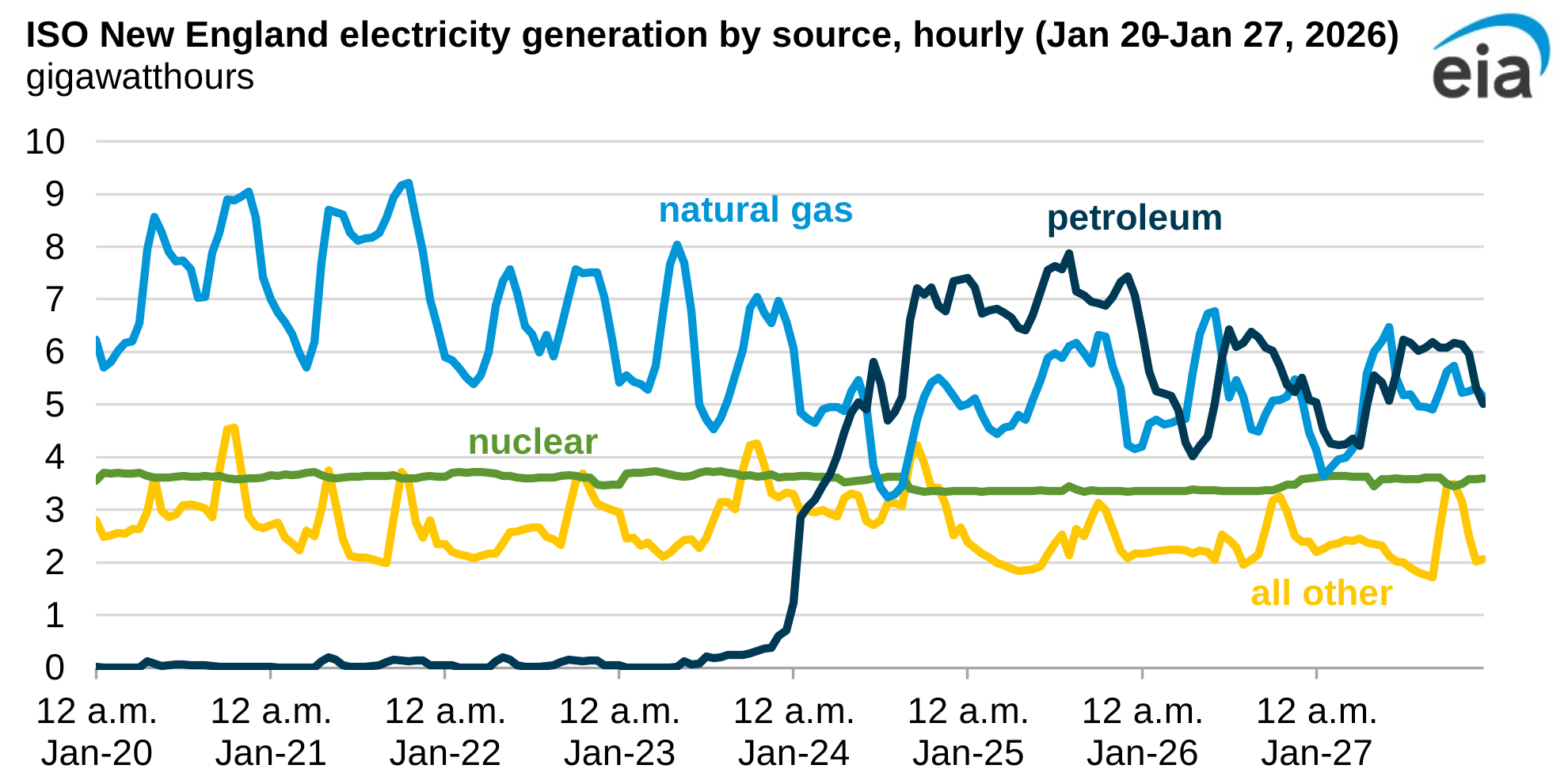
ISO New England electricity generation by source

Data source: U.S. Energy Information Administration, Hourly Electric Grid Monitor

Although petroleum accounts for less than 1% of total U.S. utility-scale electric power generation, regions such as New England rely on oil-fired units during winter periods when cold weather creates high demand. When Winter Storm Fern affected New England this week, petroleum was the predominant energy source starting around midday on January 24 and lasting until early morning on January 26. Since then, petroleum and natural gas have been fluctuating as the primary energy source.

New England’s generating capacity of 35.5 gigawatts (GW) is about 3% of U.S. capacity; however, the region holds a disproportionate 20% of the nation’s total petroleum-fired capacity. Residual oil-fired boilers account for 58%, or 3.2 GW, of New England total petroleum capacity, with the remaining 2.3 GW coming from combustion turbine generators that primarily fire distillate fuel oil (DFO).

Petroleum-fired generation in New England reached almost 8.0 GW between January 25 and 26, exceeding the capacity available from units that predominantly use petroleum, indicating contribution from fuel-switching units. Almost 41% of New England’s 15.1 GW natural gas-fired generating capacity can switch fuels to burn DFO. Operators commonly switch fuel when natural gas is either too costly or unavailable, which can happen if natural gas supplies are contractually obligated to home heating before electricity generation.

Principal contributor: Glenn McGrath

Statistics
Analysis
Tools
Education
News

Petroleum & Other Liquids

Crude oil, gasoline, heating oil, diesel, propane, and other liquids including biofuels and natural gas liquids.

Natural Gas

Exploration and reserves, storage, imports and exports, production, prices, sales.

Electricity

Sales, revenue and prices, power plants, fuel use, stocks, generation, trade, demand & emissions.

Coal

Reserves, production, prices, employment and productivity, distribution, stocks, imports and exports.

Nuclear & Uranium

Uranium fuel, nuclear reactors, generation, spent fuel.

Renewable & Alternative Fuels

Includes hydropower, solar, wind, geothermal, biomass and ethanol.

EIA Survey Forms

Forms EIA uses to collect energy data including descriptions, links to survey instructions, and additional information.

Total Energy

Comprehensive data summaries, comparisons, analysis, and projections integrated across all energy sources.

U.S. States

State energy information, including overviews, rankings, data, and analyses.

International

International energy information, including overviews, rankings, data, and analyses.

Environment

Greenhouse gas data, voluntary reporting, electric power plant emissions.

Data Tools, Apps, & Maps

Tools to customize searches, view specific data sets, study detailed documentation, and access time-series data.

Open Data

EIA's free and open data available as API, Excel add-in, bulk files, and widgets

EIA Beta

Come test out some of the products still in development and let us know what you think!

Open Source Code

EIA's open source code, available on GitHub.

RSS Feeds

Subscribe to feeds for updates on EIA products including Today in Energy and What's New.