
EIA forecasts new export licensing requirements will reduce U.S. ethane exports
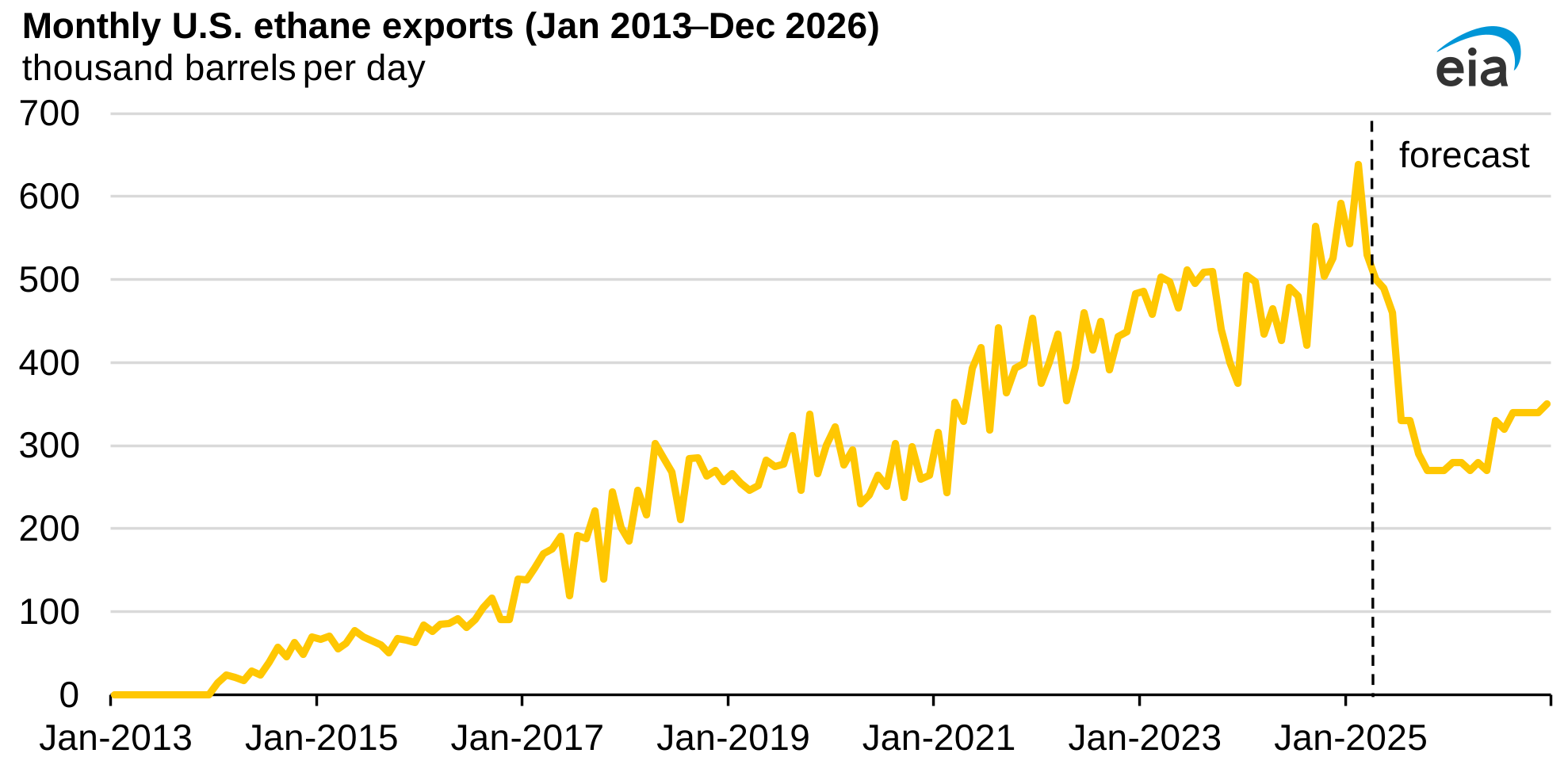
We forecast U.S. ethane exports will decrease by 80,000 barrels per day (b/d) this year and by 177,000 b/d in 2026 in our June Short-Term Energy Outlook because of new licensing requirements for U.S. exports of ethane to China. Any policy changes that relax licensing requirements, such as the outcome of trade negotiations between the United States and China, would lead us to increase our forecasts for U.S. ethane exports again.
China is the largest destination for U.S. ethane exports, accounting for 47% of U.S. ethane exports in 2024. All U.S. ethane exports to China come from two terminals on the U.S. Gulf Coast. Enterprise operates a terminal in Morgan’s Point, Texas, and Energy Transfer operates a terminal in Nederland, Texas. These terminals have long-term contracts with ethane cracking facilities in China. Both companies announced they received notice from the U.S. Department of Commerce’s Bureau of Industry and Security (BIS) that they need to apply for a special license to export ethane to China. Both Enterprise and Energy Transfer report that BIS said ethane exports to China pose an “unacceptable risk” that the material could be used for military purposes.
According to Vortexa data, as of June 16, seven Very Large Ethane Carriers (VLECs), nearly a quarter of the VLEC fleet, are stalled along the U.S. Gulf Coast. Two stalled VLECs are laden with nearly 1 million barrels of ethane each. Typically, these loaded VLECs would be headed to China through the Panama Canal, indicating that they were likely loaded before the export licenses were denied. Three VLECs that typically go to China are ballast (empty) and moored off the U.S. Gulf Coast. Two vessels that typically carry ethane from the U.S. Gulf Coast to China on long-term agreements have been diverted to ethane crackers in Dahej, India. The last shipment of U.S. ethane to China left May 23 from Energy Transfer’s terminal on the U.S. Gulf Coast.
Ethane is a natural gas liquid extracted from wet natural gas during processing and is primarily used to produce ethylene. Ethylene is a crucial component in the petrochemical industry and a building block for plastics, resins, and synthetic rubber.
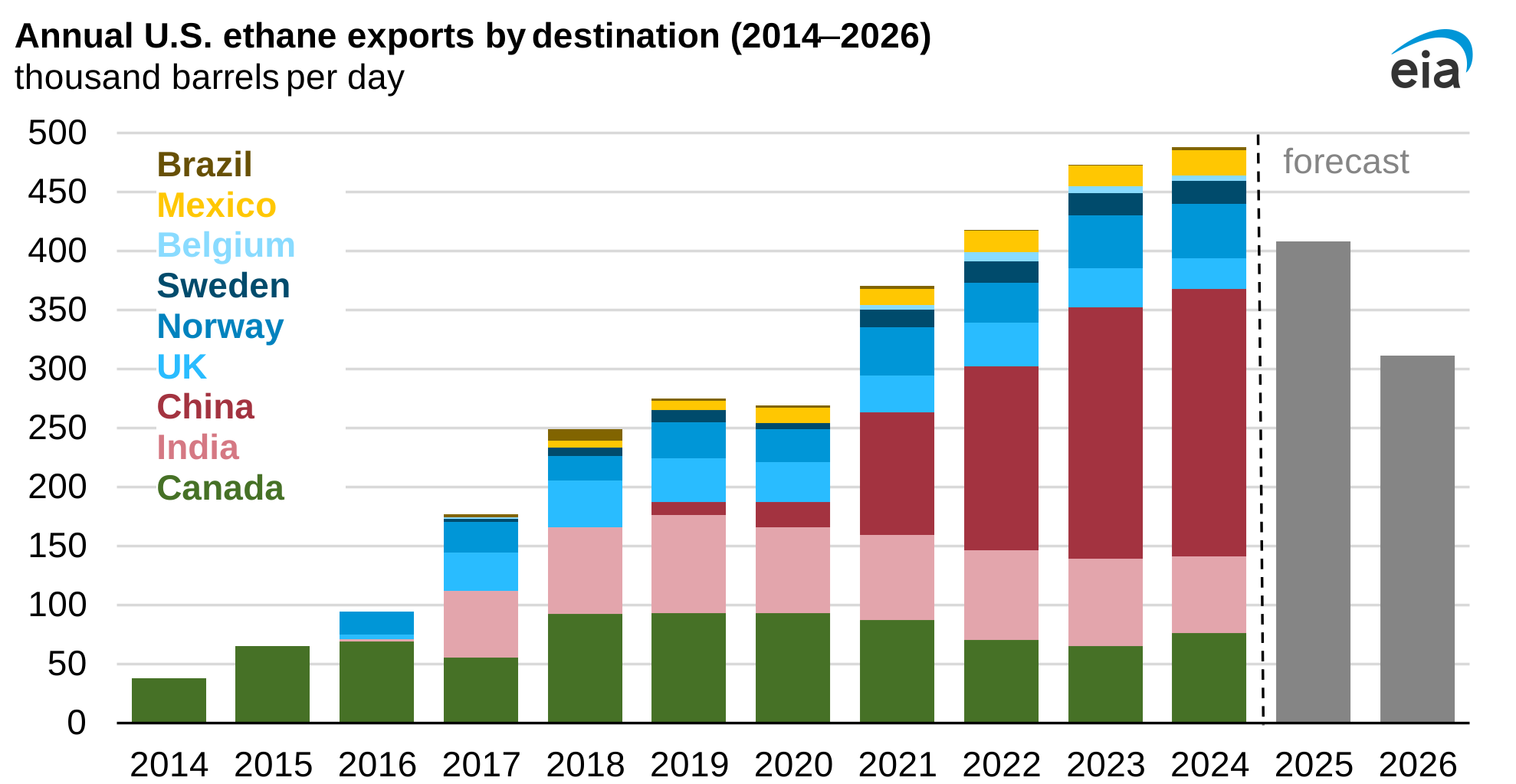
Average annual U.S. ethane exports have increased every year since 2014 except 2020, when exports fell slightly due to the COVID-19 pandemic. Growing U.S. ethane exports have been supported by rising global petrochemical demand, ethane’s cost advantage in ethylene production over other feedstocks such as naphtha and propane, and increased ethane tanker fleet shipping capacity.
Crackers in China that can only use ethane as a feedstock, such as Satellite Petrochemical, have already shut down, according to Argus, because no alternative sources for ethane imports exist. Other crackers in China can switch feedstock to naphtha or liquified petroleum gas (propane and butane), such as SP Chemical’s Taixing cracker.
Principal contributor: Josh Eiermann