
Gulf of America oil and natural gas production expected to remain stable through 2026
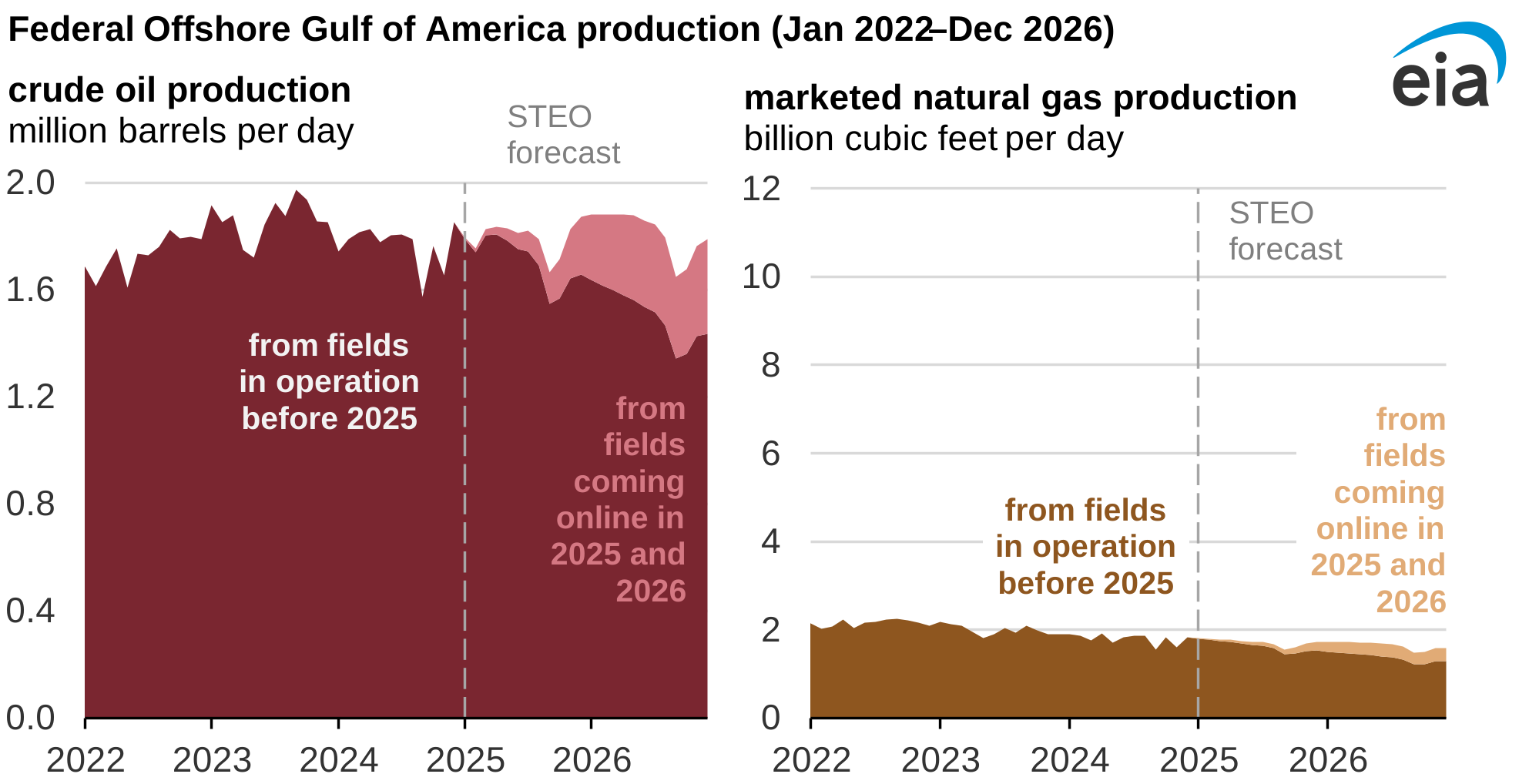
We forecast crude oil production in the Federal Offshore Gulf of America (GOA) will average 1.80 million barrels per day (b/d) in 2025 and 1.81 million b/d in 2026, compared with 1.77 million b/d in 2024, in our most recent Short-Term Energy Outlook (STEO). We expect GOA natural gas production to average 1.72 billion cubic feet per day (Bcf/d) in 2025 and 1.64 Bcf/d in 2026, compared with 1.79 Bcf/d in 2024. At these volumes, the GOA is forecast to contribute about 13% of U.S. crude oil production and 1% of U.S. marketed natural gas production in 2025 and 2026.
We expect operators to start crude oil and natural gas production at 13 fields in the GOA during 2025 and 2026, without which GOA production would decline. Eight fields will be developed using subsea tiebacks or underwater extensions to existing Floating Production Units (FPUs) at the surface. Five fields will produce from four new FPUs, with one of the new FPUs (Salamanca FPU) targeting production from two fields.
We expect the additional crude oil production from all new fields will contribute 85,000 b/d in 2025 and 308,000 b/d in 2026. We expect associated natural gas production from the new fields will average 0.09 Bcf/d in 2025 and 0.27 Bcf/d in 2026.
Three fields began producing earlier this year:
- Whale
Whale, one of the largest fields expected to come online in 2025 and 2026, started producing in January 2025 from a new FPU of the same name. The Whale FPU, located in more than 8,600 feet of water, is expected to produce around 85,000 b/d of crude oil at its peak. - Ballymore
The Ballymore field started production in April 2025 as a subsea tieback to the existing Blind Faith facility, and it is expected to produce 75,000 b/d from the Ballymore wells in the emerging Upper Jurassic/Norphlet play. - Dover
The Dover field also started production in April as a subsea tieback to the existing Appomattox facility with expected peak production of around 15,000 b/d.
Production coming online in the second half of 2025:
- Shenandoah
The Shenandoah field, which will produce from an FPU of the same name, is scheduled to start production in June 2025 with an initial capacity of 120,000 b/d, which will be expanded to 140,000 b/d in early 2026. The Shenandoah Phase 1 development will use new technologies to produce from a deepwater high-pressure field. - Leon and Castile
Another new FPU we expect to come online in the second half of 2025, Salamanca, will process oil and natural gas from the Leon and Castile discoveries. The Salamanca project involved refurbishing a previously decommissioned production facility and has a capacity of 60,000 b/d of oil and 40 million cubic feet per day of natural gas. - We expect other subsea tiebacks to existing facilities to enter production in late 2025: Katmai West, Sunspear, Argos Southwest Extension, and Zephyrus Phase 1.
Production coming online in 2026:
Three new subsea tiebacks are expected to begin production in 2026: Silvertip Phase 3, Longclaw, and Monument, a subsea tieback to the Shenandoah FPU.
Hurricanes in the Gulf of America could disrupt the production and development timeline of these new fields. Colorado State University anticipates that the 2025 Atlantic Basin hurricane season will have above-normal activity with 17 named storms.
Principal contributor: Eulalia Munoz-Cortijo