
Natural gas-fired electricity generation in Texas set winter record in January 2024
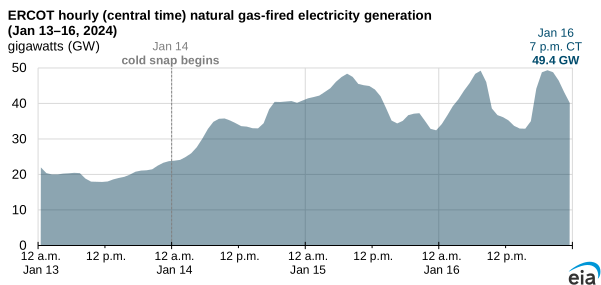
Note: ERCOT=Electric Reliability Council of Texas; CT=central time
The electric power grid managed by the Electric Reliability Council of Texas (ERCOT) recorded an all-time high for winter natural gas-fired electricity generation for an hour in January, according to our Hourly Electric Grid Monitor, when a three-day cold snap increased electricity demand. Hourly natural gas-fired electricity generation increased to 49.4 gigawatts (GW) for the hour starting at 7:00 p.m. central time on January 16, 2024, 1% more than the previous winter record of 48.8 GW set on December 23, 2022, and within 4% of the summer hourly high of 51.2 GW set between 7:00 p.m. and 8:00 p.m. on August 25, 2023.
Electricity demand typically peaks in Texas in the summer during heat waves and in the winter during cold snaps. During peaks in electricity demand, grid operators must have dispatchable electricity generation sources available. Surges in electricity demand in ERCOT, which operates approximately 90% of Texas's electricity load, are primarily supplied by natural gas-fired generation.
On a daily basis, natural gas-fired electricity generation made up 56% of all generation in ERCOT during the cold snap (January 14–16, 2024), compared with an average share of 46% for January 2024, as wind and solar electricity output declined and overall electricity demand for heating increased. On January 16, natural gas-fired electricity generation totaled 986.2 gigawatthours (GWh), 72% more than the January 2024 average of 572.9 GWh and just a little less than the ERCOT winter record of 1,006 GWh set on December 23, 2022, according to our Hourly Electric Grid Monitor.
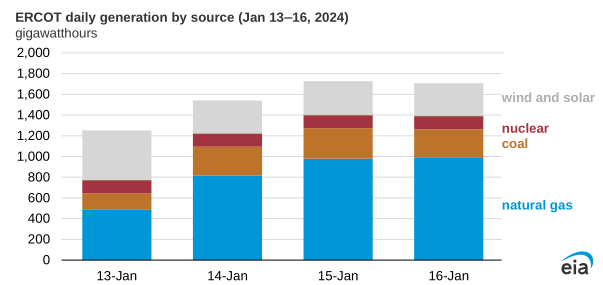
Note: ERCOT=Electric Reliability Council of Texas
Net electricity load requirements (which excludes variable generation such as wind and solar) peaked on January 15 by 630.6 GWh more than the day before the cold snap started (January 13). Natural gas supplied 78% of the generation needed to meet this additional net electricity load. Between January 14 and 15, natural gas-fired generation supplied 91% (164.2 GWh) of the increase in net electricity load.
On January 15, increased demand in Texas for electricity led to record daily natural gas consumption by the Texas electric power sector, 8.6 billion cubic feet per day (Bcf/d), a 0.1-Bcf/d increase over the previous record set on August 25, 2023, according to data from S&P Global Commodity Insights.
Despite involuntary production interruptions including inclement weather, maintenance events, and temporary oversupply conditions on natural gas pipelines, natural gas supplies in Texas were sufficient during peak generation throughout the past winter. Weatherization standards implemented in August 2022 following Winter Storm Uri required critical natural gas infrastructure, including pipelines servicing electricity generation facilities, to be protected against weather emergencies.
Principal contributors: Jordan Young, Mark Morey
Tags: generation, electricity, natural gas, weather, Texas, states