U.S. Energy Information Administration logo
Skip to sub-navigation
April 5, 2022

Prices for California’s emissions credits increase in early 2022 auction
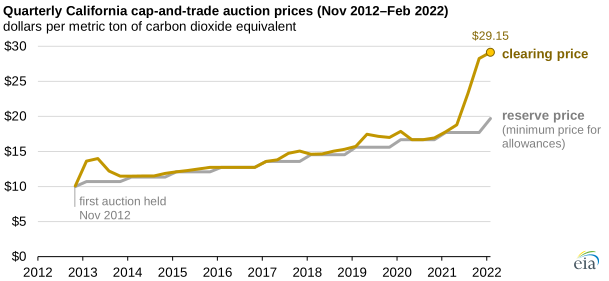
quarterly california cap-and-trade auction prices
Source: Graph by the U.S. Energy Information Administration, based on California Air Resources Board data
Note: Prices are for the current vintage allowances sold in each auction.

In its first quarterly auction of 2022, emissions credits in the joint California-Quebec allowance auction sold for $29.15 per metric ton of carbon dioxide equivalent, or nearly $10 per metric ton more than the minimum price for allowances. Emissions credits sold in this market can be used to comply with California’s cap-and-trade program, which covers nearly all sources of emissions within the state, including electric utilities, industrial facilities, and distributors of natural gas and gasoline.

Since 2012, most of the auctions have sold emissions credits at prices near the auction reserve price, the minimum price for allowances in each auction. Under the cap-and-trade program, the steadily declining cap on emissions helps California’s public and private energy producers to meet carbon dioxide emissions reduction goals set by the state legislature. Actual emissions have been below the cap in each of the compliance years through 2020, the latest data published.
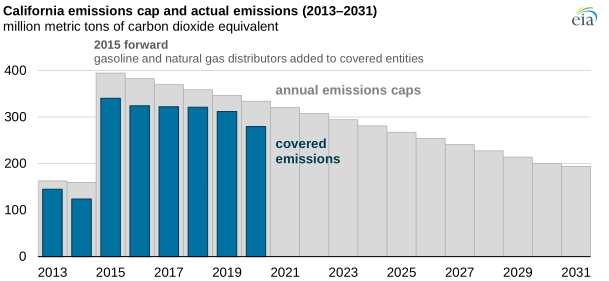
California emissions cap and actual emissions
Source: Graph by the U.S. Energy Information Administration, based on California Air Resources Board data

Proceeds from the sale of allowances in California are split between the state and utilities that use the revenue to offset compliance costs. In the most recent auction, the California Air Resources Board collected more than $1.5 billion in revenue: 63% of the proceeds will go to the state, and 37% will go to public- and investor-owned utilities.

To comply with the cap, the program requires all facilities to submit emissions allowance permits for each metric ton of emissions they produce. The California cap-and-trade program is one of two major cap-and-trade programs for greenhouse gas emissions in the United States. The Regional Greenhouse Gas Initiative has been in effect in the northeastern United States since 2009, but it only applies to the electric power sector.

Principal contributor: M. Tyson Brown

Statistics
Analysis
Tools
Education
News

Petroleum & Other Liquids

Crude oil, gasoline, heating oil, diesel, propane, and other liquids including biofuels and natural gas liquids.

Natural Gas

Exploration and reserves, storage, imports and exports, production, prices, sales.

Electricity

Sales, revenue and prices, power plants, fuel use, stocks, generation, trade, demand & emissions.

Coal

Reserves, production, prices, employment and productivity, distribution, stocks, imports and exports.

Nuclear & Uranium

Uranium fuel, nuclear reactors, generation, spent fuel.

Renewable & Alternative Fuels

Includes hydropower, solar, wind, geothermal, biomass and ethanol.

EIA Survey Forms

Forms EIA uses to collect energy data including descriptions, links to survey instructions, and additional information.

Total Energy

Comprehensive data summaries, comparisons, analysis, and projections integrated across all energy sources.

U.S. States

State energy information, including overviews, rankings, data, and analyses.

International

International energy information, including overviews, rankings, data, and analyses.

Environment

Greenhouse gas data, voluntary reporting, electric power plant emissions.

Data Tools, Apps, & Maps

Tools to customize searches, view specific data sets, study detailed documentation, and access time-series data.

Open Data

EIA's free and open data available as API, Excel add-in, bulk files, and widgets

EIA Beta

Come test out some of the products still in development and let us know what you think!

Open Source Code

EIA's open source code, available on GitHub.

RSS Feeds

Subscribe to feeds for updates on EIA products including Today in Energy and What's New.