
Five states updated or adopted new clean energy standards in 2021
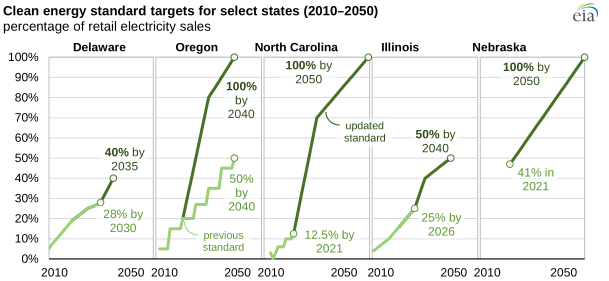
As of the end of 2021, 31 states and the District of Columbia had renewable portfolio standards (RPS) or clean energy standards (CES). These policies require electricity suppliers to supply a set share of their electricity from designated renewable resources or carbon-free eligible technologies. Four states—Delaware, Oregon, North Carolina, and Illinois—updated their RPS or CES policies in 2021. In addition, Nebraska approved its first clean energy goal in December 2021, becoming the 20th U.S. state to commit to 100% clean electricity by 2050.
States with legally binding RPSs collectively accounted for 67% of total electricity retail sales in the United States in 2020. In addition to the 31 states with binding RPS or CES policies, 7 states have nonbinding renewable portfolio goals.
States use terms such as carbon-free, carbon-neutral, renewables, or clean energy to define their RPS or CES policies. However, the definitions of these terms sometimes vary by state, which allows technologies that might not generally be considered renewable, such as nuclear energy or natural gas fitted with carbon-capture sequestration technology, to count toward the state’s policy target.
Delaware increased its overall RPS target in February 2021 to a 40% renewable generation share of electricity sales by 2035, up from the previous target of 28% by 2030.
In July 2021, the Oregon legislature increased the state CES to a 100% clean energy share of sales by 2040. Retail electricity providers must reduce CO2 emissions from 2005 levels by 80% by 2030 and by 90% by 2035, before reaching the carbon-free target of 100% in 2040.
In September 2021, Illinois increased its overall RPS target to 50% of electricity sales from renewables by 2040, replacing the earlier target of 25% by 2026.
In October 2021, North Carolina increased its CES target to 100% of electricity sales from carbon-neutral generation by 2050, an increase from the previous target of 12.5% of sales from renewable generation by 2021. The legislation includes an interim target of a 70% reduction in CO2 emissions from 2005 levels from electricity-generating facilities owned or operated by public electric utilities in the state by 2030.
In December 2021, Nebraska Public Power District (NPPD), which oversees electricity generation in the state, approved a goal to achieve 100% carbon-free generation in 2050. Nebraska generated 41% of its total annual electricity from carbon-free sources in 2020, which it considers the starting point for the new 100% clean energy standard policy.
Principal contributor: Richard Bowers