
Warehouses were the most common U.S. commercial building type as of 2018
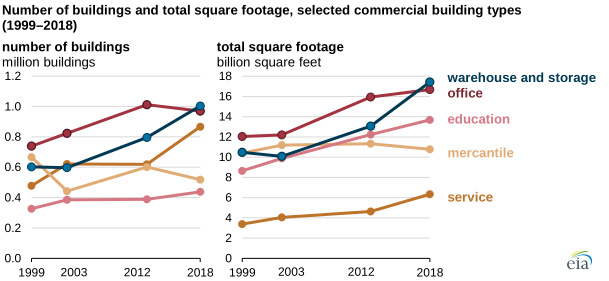
As of 2018, warehouse and storage buildings were the most common type of commercial building in the country, according to our most recent Commercial Buildings Energy Consumption Survey (CBECS). Our most recent CBECS was released in September 2021 and was based on buildings characteristics as of 2018. We estimate that the United States had just over 1 million warehouse and storage buildings as of 2018 and a total floorspace of 17.4 billion square feet. This survey marks the first time since CBECS was released in 1979 that warehouse and storage buildings were the most common building type, ranked by both number of buildings and by total square footage.
We define warehouse and storage buildings as buildings used to store goods, manufactured products, merchandise, raw materials, or personal belongings. Examples of warehouse and storage buildings include refrigerated and non-refrigerated warehouses, distribution or shipping centers, and public rental storage units. The number of warehouse and storage buildings grew by 26% between 2012 and 2018, while commercial buildings as a whole increased by 7%. The Midwest Census Region saw the largest growth in warehouse and storage buildings, increasing from 163,000 buildings in 2012 to 307,000 buildings in 2018.
Between 1999 and 2018, office buildings were the most common building type in the United States in terms of both floorspace and number of buildings. Between 2012 and 2018, the number of office buildings declined slightly, although total office floorspace still increased.
Our CBECS collects the only nationally representative data about building characteristics and energy use in commercial buildings in the United States. The most recent CBECS data release includes information on building characteristics such as square footage, lighting types, heating and cooling equipment, and more. We expect to publish more detailed, building-level characteristics data in November 2021 and then publish data related to energy consumption and expenditures in U.S. commercial buildings during summer 2022.
Principal contributor: Zack Marohl