U.S. Energy Information Administration logo
Skip to sub-navigation
October 5, 2021

A change in China’s tax policy is affecting Asia's petroleum product trade
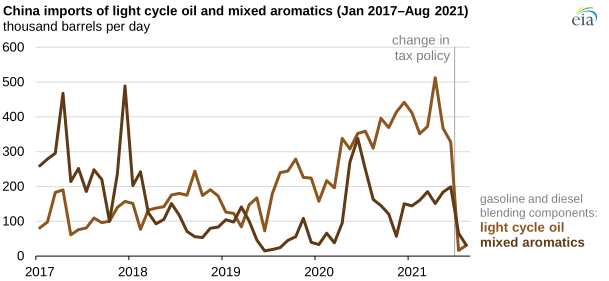
China imports of light cycle oil and mixed aromatics
Source: Graph by the U.S. Energy Information Administration, based on data from Global Trade Tracker

In June of this year, China implemented a new consumption tax policy that affects imports of two fuels: mixed aromatics, which were blended into gasoline, and light cycle oil, which was blended into diesel. These components were previously exempt from China’s consumption tax. This new policy has reduced China’s imports of these products and its exports of petroleum products.

China increased its imports of light cycle oil and mixed aromatics in 2020 and the first half of 2021, before these products were subject to the consumption tax. Once the tax took effect, China’s imports of light cycle oil decreased from an average of 390,000 barrels per day (b/d) in the first six months of 2021 to 20,000 b/d in July and 30,000 b/d in August, the first two full months after the change in policy. Similarly, China’s imports of mixed aromatics fell from an average of 170,000 b/d in the first six months of 2021 to 70,000 b/d in July and 30,000 b/d in August.

Light cycle oil and mixed aromatics may not be economical for gasoline and diesel blending under the new tax policy, but China’s policy provides a tax rebate on these fuels when they are used for petrochemical production, which likely explains why these fuels are still imported, albeit at lower levels.

These tax policy changes are also affecting China’s petroleum product exports. China exported relatively large quantities of distillate and gasoline in the first half of 2021 because of higher refining output and a high export quota at the beginning of the year. However, under the new tax policy, domestic refiners have reduced exports, likely to make up for the decrease in the supply of light cycle oil and mixed aromatics.
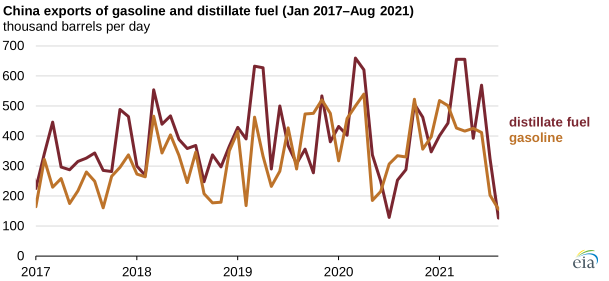
china exports of gasoline and distillate fuel
Source: Graph by the U.S. Energy Information Administration, based on data from China General Administration of Customs, as compiled by Bloomberg L.P.

Principal contributor: Jimmy Troderman

Statistics
Analysis
Tools
Education
News

Petroleum & Other Liquids

Crude oil, gasoline, heating oil, diesel, propane, and other liquids including biofuels and natural gas liquids.

Natural Gas

Exploration and reserves, storage, imports and exports, production, prices, sales.

Electricity

Sales, revenue and prices, power plants, fuel use, stocks, generation, trade, demand & emissions.

Coal

Reserves, production, prices, employment and productivity, distribution, stocks, imports and exports.

Nuclear & Uranium

Uranium fuel, nuclear reactors, generation, spent fuel.

Renewable & Alternative Fuels

Includes hydropower, solar, wind, geothermal, biomass and ethanol.

EIA Survey Forms

Forms EIA uses to collect energy data including descriptions, links to survey instructions, and additional information.

Total Energy

Comprehensive data summaries, comparisons, analysis, and projections integrated across all energy sources.

U.S. States

State energy information, including overviews, rankings, data, and analyses.

International

International energy information, including overviews, rankings, data, and analyses.

Environment

Greenhouse gas data, voluntary reporting, electric power plant emissions.

Data Tools, Apps, & Maps

Tools to customize searches, view specific data sets, study detailed documentation, and access time-series data.

Open Data

EIA's free and open data available as API, Excel add-in, bulk files, and widgets

EIA Beta

Come test out some of the products still in development and let us know what you think!

Open Source Code

EIA's open source code, available on GitHub.

RSS Feeds

Subscribe to feeds for updates on EIA products including Today in Energy and What's New.