
Utilities continue to increase spending on the electric transmission system
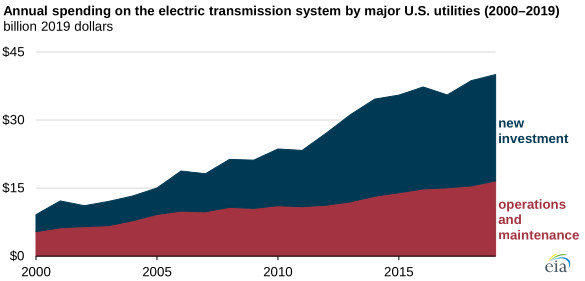
Annual spending by major U.S. electric utilities on the U.S. electric transmission system has increased from $9.1 billion (2019 dollars) in 2000 to $40.0 billion in 2019. This spending includes investment in new transmission infrastructure as well as the operation and maintenance of existing transmission systems. Based on information compiled from reports to the Federal Energy Regulatory Commission (FERC), spending is leveling off but still rose 3% from 2018 to 2019. Of the $40.0 billion that major utilities spent in 2019, $23.5 billion was on new transmission investment, a 1% increase over the previous year. Utilities spent $16.6 billion on transmission system operations and maintenance (O&M) in 2019, 7% more than in 2018.
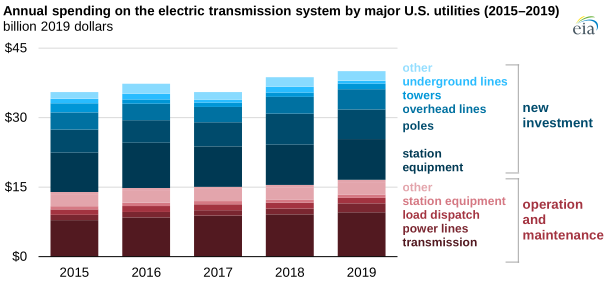
Power plants are often located far from customers, requiring large networks of transmission power lines to deliver electricity. In 2019, most utility spending on transmission system O&M was on payments to transmit electricity on power lines owned by other utilities or independent transmission owners.
Most new transmission investment has been on station equipment, poles, and overhead power lines. These investments replaced aging infrastructure, enhanced grid reliability and resilience during extreme weather events, reduced congestion, and connected to renewable resources. Some recently completed and ongoing major projects include:
- The Midcontinent Independent System Operator (MISO), which covers much of the Midwest and part of the Gulf Coast, energized more than $3 billion worth of transmission infrastructure projects in 2019 and more than $2 billion in 2020. These projects replaced and rebuilt aging infrastructure and added new power lines, towers, and substations to improve grid reliability and accommodate load growth.
- In 2020, Minnesota Power energized the 224-mile, 500-kilovolt (kV) Great Northern Transmission line to connect Minnesota to hydropower plants in Canada.
- Pacific Gas & Electric (PG&E) and Southern California Edison (SCE) in California each spent more than $1 billion in 2019 on new transmission infrastructure, largely on wildfire mitigation measures.
- Public Service Electric and Gas (PSE&G), serving customers in New Jersey, invested more than $1 billion in transmission infrastructure in 2019 as it entered the second phase of its post-Superstorm Sandy Energy Strong program to harden and improve the transmission system’s resiliency against extreme weather.
In March 2020, FERC proposed to revise its electric transmission incentive policy to stimulate the development of transmission infrastructure needed to support the nation’s evolving renewable generation resource mix, technological innovation, and shifts in load patterns. Transmission incentives, currently based on the risks and challenges faced by a particular transmission project, would be contingent on the expected benefits provided to consumers.
Principal contributor: Lori Aniti
Tags: electricity, transmission, utility