
U.S. coal exports declined in 2019
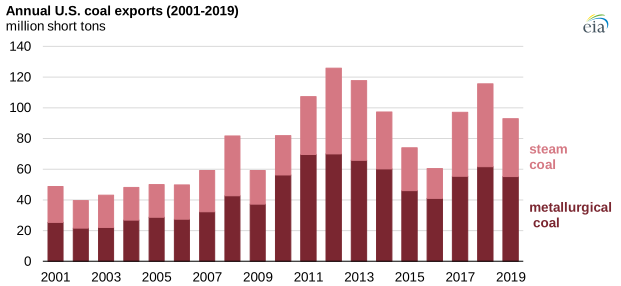
In 2019, U.S. coal exports declined to 93 million short tons (MMst), a 20% decrease from the previous year, according to the U.S. Energy Information Administration’s Annual Coal Report. The United States exports metallurgical coal and steam coal, and exports of both decreased in 2019. U.S. steam coal exports were affected by the downturn in global coal demand, dropping 30% in 2019 from 2018. Metallurgical coal had a more moderate decline of 10%.
Steam coal, also known as thermal coal, is used for electricity generation. Steam coal is ground into a fine powder that burns quickly at high heat. Power plants use this powder to heat water in boilers, which run steam turbines to generate electricity. Steam coal can also be used to provide space heating for homes and businesses. Although steam coal is mined across the United States, most steam coal originates in the Powder River Basin in Wyoming and Montana, which produced about 44% of all U.S. coal in 2019.
Metallurgical coal or coking coal can be used to produce coke, a primary fuel and reactant in the blast furnace process for steelmaking. Demand for metallurgical coal is correlated with the demand for steel. Most metallurgical coal produced in the United States comes from basins in Appalachia.
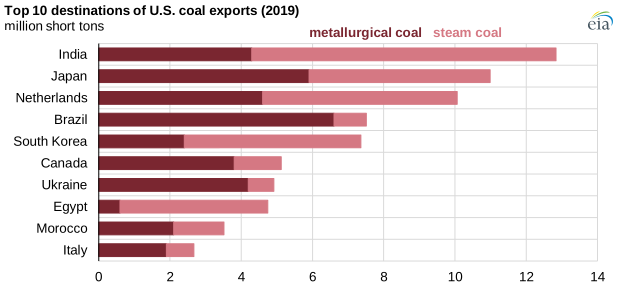
In 2019, India, Japan, the Netherlands, Brazil, and South Korea were the top five destinations for U.S. coal exports. Together, these countries accounted for 53% of coal exports.
About 75% of India’s electric power was generated by burning coal in 2019, 85% of which was covered by domestic production and the rest was imported. India continues to demand relatively large imports of steam coal. In 2019, India received 8.1 MMst of steam coal from the United States, making it the largest destination for U.S. shipments for the third consecutive year. Total coal exports to India in 2019 were 12.8 MMst.
Japan’s coal consumption is almost evenly split between steam and metallurgical coal. Japan’s imports of U.S. coal remained steady at 2018 levels despite the country’s overall steel production falling almost 5%.
The Netherlands was the third-largest destination for U.S. coal exports at 10 MMst, although not all of the coal shipped to the Netherlands remained there. The Netherlands serves as the primary transshipment hub for the rest of the European Union, and in 2019, most of the country’s imports of coal from the United States were shipped to Germany. Only 30% stayed in the Netherlands for domestic consumption. Germany imported about 40 MMst of coal in 2019, and 1.8 MMst came directly from the United States.
Brazil was the largest U.S. metallurgical coal destination in 2019, importing 6.6 MMst. South Korea was the third-largest importer of U.S. steam coal in 2019, importing 4.7 MMst, down from 6.4 MMst in 2018. South Korea’s imports of U.S. steam coal will likely fall further in 2020 as the country undergoes a series of organized short-term coal-fired plant shutdowns to improve air quality.
Although exports to some of the largest U.S. coal-importing countries declined, growth in smaller electricity markets increased in 2019. For example, U.S. steam coal exports to Egypt increased by 28% during 2019, mainly for cement production.
Principal contributor: Bonnie West
Tags: coal, exports/imports