
The Renewable Fuel Standard Program, RVOs, and RINs explained
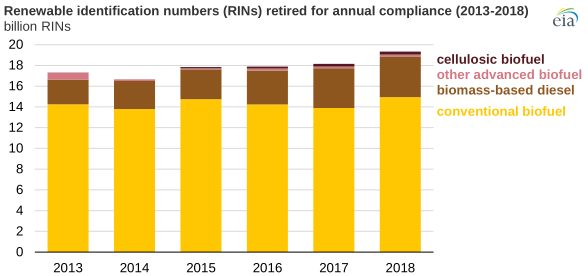
Note: Conventional biofuel is the remainder of renewable fuels minus advanced biofuels and consists mainly of corn starch ethanol.
The Renewable Fuel Standard (RFS) is a federal program that mandates the incorporation of renewable fuels into the nation’s transportation fuel supply. Each year, the U.S. Environmental Protection Agency (EPA) issues RFS rulemakings with volume requirements for certain renewable fuel categories and sets those volumes through annual renewable volume obligations (RVO). RVOs are the volumetric biofuel targets for obligated parties such as refiners and importers of petroleum-based gasoline or diesel fuel.
In November 2018, EPA issued the 2019 final volume requirements for cellulosic biofuels, advanced biofuels, and renewable fuels, as well as the 2020 volume requirements for biomass-based diesel. In that rule, EPA calculated 2019 RVO percentages from the total supply of gasoline and diesel transportation fuels that the U.S. Energy Information Administration (EIA) had forecast in its October 2018 Short-Term Energy Outlook. Based on EPA renewable identification number (RIN) data for 2018, 95% of RINs generated under the RFS were made up of conventional biofuel (mainly corn starch ethanol) and biodiesel.
Obligated producers and importers of biofuels and petroleum products and other companies register with the EPA and report the number of RINs they generate, separate, and retire for compliance. A RIN is a credit equivalent to a gallon of fuel ethanol. Different renewable fuel types receive credit for specific numbers of RINs based on their estimated equivalence value relative to ethanol as determined by EPA.
For example, each physical gallon of renewable diesel is assigned 1.7 RINs; a physical gallon of biodiesel is assigned 1.5 RINs. RINs are valid for two compliance years: the year in which they are generated and the following year. At least 80% of a year's obligation must be met with RINs generated in that year, but some excess RINs can be held for compliance in the following year.
RVOs are calculated as percentages across the four categories of RFS biofuels targets. Obligated parties multiply these percentages by the volume of petroleum-based gasoline and diesel fuel they produced or imported to determine their specific renewable fuel obligations for that calendar year.
When renewable fuels are blended into gasoline and diesel fuel, the RIN is separated from the physical gallon of transportation fuel and can either be used (retired) to meet compliance requirements or traded to other parties. Similar to other traded commodities, RIN values change with market conditions. Each week, EPA reports transacted RIN volumes and prices.
Obligated parties have the flexibility to meet RFS obligations either by separating RINs by blending physical quantities of biofuels and submitting them to the EPA for annual compliance, by purchasing already separated RINs and submitting them to the EPA for annual compliance, or by applying to the EPA for exemption of the obligation through the small refinery exemption process.
Principal contributors: Sean Hill, Steve Hanson