
Participation in electricity customer choice programs has remained unchanged since 2013
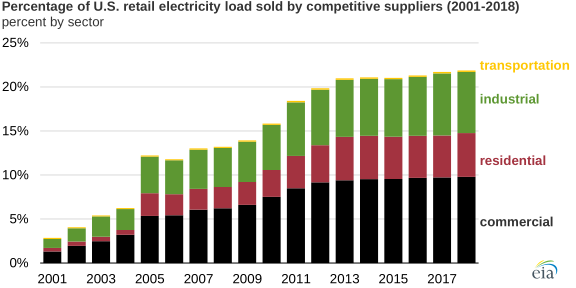
After more than a decade of steady growth, the share of U.S. electricity sales served by non-utility retail power marketers has grown only slightly since 2013, according to the U.S. Energy Information Administration’s (EIA) survey of electric utilities. Nineteen states and the District of Columbia allow some commercial and industrial customers to choose competitive retail power marketers. Fifteen of those states and the District of Columbia allow customers in all sectors to choose competitive retail power marketers.
Customer choice programs use competition to lower electricity prices and introduce new electric service products to the market. For example, these programs may offer prepaid plans that allow customers to budget their electricity expenditures or offer variable priced contracts for large commercial and industrial customers. Some power marketers will only contract with renewable energy providers, which gives customers the opportunity to finance new wind and solar generation.
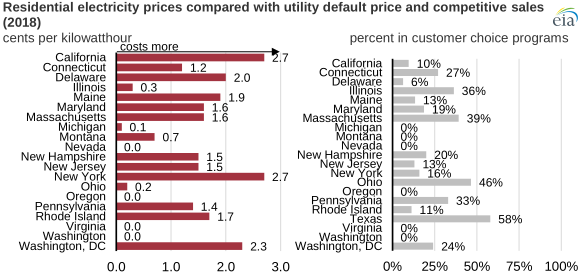
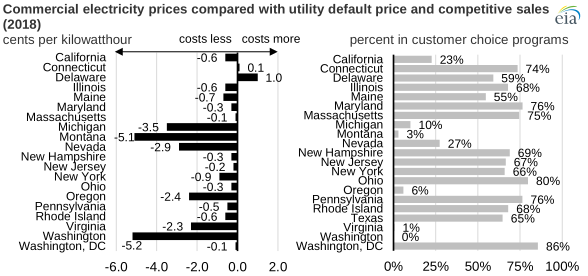
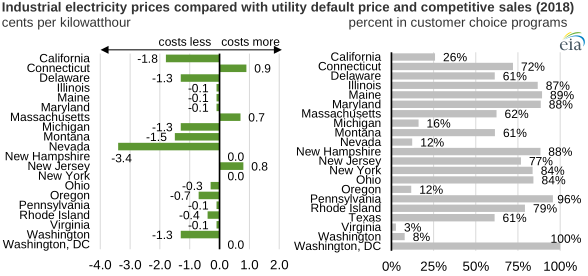
Not all customers pay less for electricity through customer choice programs. In general, residential customers have paid more per kilowatthour through competitive suppliers than noncompetitive suppliers, but commercial and industrial customers have paid less. Suppliers are likely to offer more competitively priced contracts to their largest electricity customers.
By comparison, residential and small commercial customers do not have the same leverage as large commercial and industrial energy users, although some may form purchasing groups. California has created community choice aggregators (CCAs) that allow local governments to purchase electricity and negotiate rates on behalf of their residents and small businesses. Other states allow local governments to choose a private aggregator.
Many residential and small commercial customers have been willing to pay more per kilowatthour to choose energy through renewable suppliers. Furthermore, most states with competitive retail electricity programs have required utilities to sell off their generation. Utilities purchase energy from the lowest bidders through an auction or request for proposal process for customers that do not buy from competitive suppliers, making it more difficult for retail power marketers to offer lower prices.
In the states that offer customer choice, participation is voluntary. The only exception is in the Electric Reliability Council of Texas (ERCOT), where customers of investor-owned utilities must buy their power from a competitive retail electric provider, which is why Texas is not included in the price comparisons below.
Principal contributor: Lori Aniti
Tags: residential, commercial, transportation, electricity, industrial