
Carbon dioxide emissions from electricity generation in 2015 were lowest since 1993
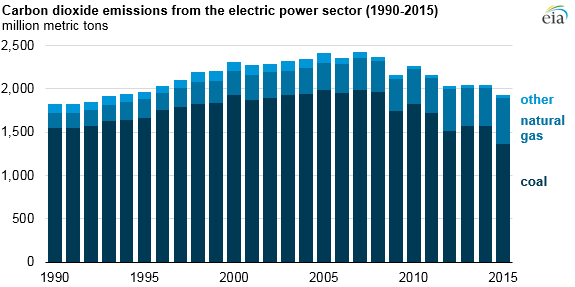
Carbon dioxide (CO2) emissions from electricity generation totaled 1,925 million metric tons in 2015, the lowest since 1993 and 21% below their 2005 level. A shift on the electricity generation mix, with generation from natural gas and renewables displacing coal-fired power, drove the reductions in emissions.
Total carbon dioxide emissions from the electric power sector declined even as demand for electricity remained relatively flat over the previous decade. In both 2013 and 2014, total electricity sales and electricity-related CO2 emissions increased. But in 2015, both sales and emissions fell. In 2015, warm winter temperatures reduced the demand for electricity, lessened the need to bring marginal generators online, and lowered natural gas prices. During seven months of 2015, electricity generated from natural gas exceeded coal generation.
Electricity generation and its resulting emissions are primarily determined by the available capacity and relative operating costs of the different technologies. Recent capacity additions have favored natural gas and renewable energy, while retirements have been mostly coal units. In recent years, the drop in natural gas prices, coupled with highly efficient natural gas-fired combined-cycle technology, made natural gas an attractive choice to serve baseload demand previously met by coal-fired generation. Coal-fired generation has decreased because of both the economics driven by cost per kilowatthour compared to that of natural gas and because of the effects of increased regulation on air emissions.
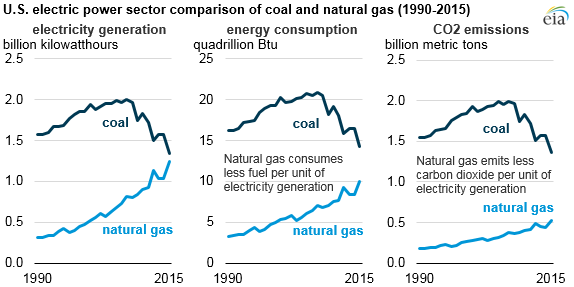
Recent shifts in the electricity generation mix have implications for both total energy consumption and energy-related CO2 emissions. Coal plants tend to have relatively low thermal efficiency compared to plants using combined-cycle technology fueled by natural gas. Although there is some variation across individual plants, in general a coal plant consumes more energy than a combined-cycle natural gas plant to produce the same amount of electricity. Also, coal's carbon content per unit of energy is nearly twice that of natural gas. Considering both the higher thermal efficiency of generators and lower carbon content of fuels, electricity generation using natural gas emits roughly 40% of the carbon dioxide that would be emitted from a coal-fired unit producing the same amount of electricity.
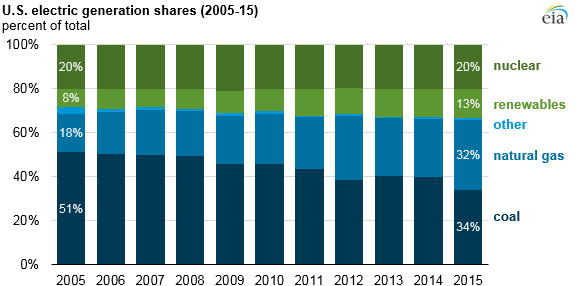
Other changes in the electric generating mix have also worked to reduce CO2 emissions. Renewable energy sources are gaining an increasing share of generation, driven primarily by increases in wind and solar capacity. Nuclear generation was relatively flat over the past decade but remains the single largest source of generation without CO2 emissions. Together, renewables and nuclear provided about 33% of overall U.S. electricity production in 2015, the highest share on record.
Principal contributor: Channele Wirman