
Four states supply domestic uranium concentrate in 2013
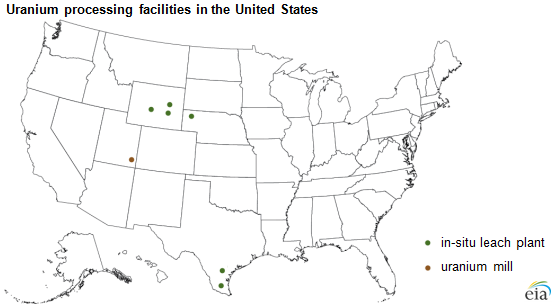
Although most of the uranium used in domestic nuclear power plants is imported, domestic uranium processing facilities still provide sizeable volumes of uranium concentrate to U.S. nuclear power plants. In 2013, uranium concentrate was produced at seven facilities in four states. Wyoming accounted for 59% of domestic production, followed by Utah (22%), Nebraska (15%), and Texas (4%), according to the World Nuclear Association.
Uranium is processed into uranium concentrate either by grinding up ore or by using a liquid mixture to dissolve and separate the uranium, a process known as in-situ leaching. Most plants use in-situ leaching; Utah's uranium mill is the only current exception. The output of the mill and the leach plants is uranium concentrate, known as U3O8 or yellowcake, which is transported to conversion and enrichment facilities for further processing before being fabricated into nuclear fuel.
In 2013, U.S. processing facilities produced 4.7 million pounds of uranium concentrate, a 12% increase from 2012 and equal to about 11% of the uranium used by the nation's 100 operating nuclear power reactors. The rest of the uranium used to fuel reactors came from other nations, including uranium received as part of the joint U.S.-Russian Megatons to Megawatts program, which ended last year.
Uranium has been produced in the western United States since World War II, but in the past 25 years, uranium concentrate has been available at competitive prices on international markets. Last year, 92% of the uranium used in U.S. nuclear power plants was of foreign origin. Several western states have shut down uranium mines as it became more economical to purchase processed uranium from foreign companies.
Despite the shutdown of facilities in several states, domestic uranium concentrate production has grown steadily over the past six years and may continue to grow. Operations of some processing facilities have either been suspended or licensed but not initiated, awaiting further market improvements. Two uranium mills in Utah and Wyoming exist but are not operating, and one in-situ leach plant in Wyoming was under construction in 2013 and has since begun operating. Demand for uranium concentrate for use in nuclear power reactors has remained relatively constant, so increasing domestic production of uranium concentrate may reduce the market share of foreign-origin uranium in the future, as current inventories are used by power generators.
Known uranium reserves in seven western states are estimated to total nearly 340 million pounds; about one-third of the reserves are in Wyoming. Other known reserves are in Arizona, Colorado, Nebraska, New Mexico, Texas, and Utah. Uranium deposits have also been identified in Alaska, North Dakota, and South Dakota, and in several other states, mostly in the West. The largest known undeveloped uranium resource in the United States and the seventh largest in the world is located on private land at Coles Hill in south central Virginia, near the North Carolina border. The deposit at Coles Hill is estimated to contain 60 million pounds of uranium.
Domestic and foreign origin uranium is used to fuel the 100 currently operating nuclear power plants in the United States. In 2013, nuclear power plants accounted for 19% of total electricity generation.
Principal contributor: Allen McFarland