
U.S. petroleum refineries running at record levels
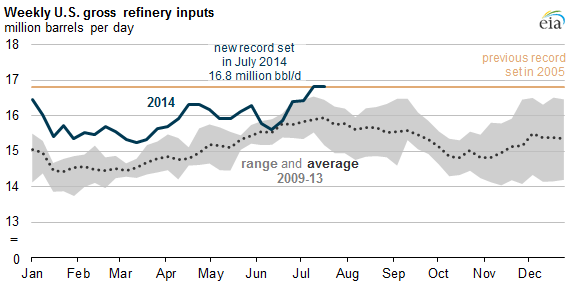
U.S. refineries have been processing record volumes of oil recently. Refinery inputs hit a record-high 16.8 million barrels per day (bbl/d) in each of the past two weeks, exceeding the previous record from summer 2005. Refineries in the Midwest and Gulf Coast in particular pushed the total U.S. input volume upward, as these refiners' access to lower-cost crude oil, expansions of refining capacity, and increases in both domestic demand and exports contributed to higher refinery runs.
As discussed in This Week in Petroleum, refinery gross inputs in the Midwest have been higher than the five-year range since late April. Typically, Midwest drivers use more motor gasoline in the summer, and some of that has come from the Gulf Coast. However, recent and planned changes to pipeline infrastructure have altered both the type of products in the pipelines and direction of flow. These changes increase the incentive for Midwest refiners to boost their own gasoline production.
The Midwest's record-high runs of 3.8 million bbl/d for the week ending July 11 pushed the region's refinery utilization to 100.3%, the first time any of the Petroleum Administration for Defense Districts (PADDs) has exceeded 100% since EIA began publishing weekly PADD-level utilization in June 2010. But this number says as much about the metric used as the feat itself. Refinery utilization is calculated based on calendar-day atmospheric crude distillation unit (ACDU) capacity, which takes into account usual operating conditions, including both planned and unplanned outages. Under ideal conditions, when outages are low, refiners can produce at levels above their calendar-day ACDU capacity.
Realization of long-anticipated capacity expansions in the Gulf Coast region has also pushed their regional refinery runs to record levels. Gulf Coast gross inputs rose to 8.5 million bbl/d for the week ending June 27 and reached 8.7 million bbl/d for each of the following two weeks. The United States remains an increasingly active participant in the global petroleum products trade. The Gulf Coast region's competitive advantage, which is based on upgrading capacity of refineries, relatively lower costs of inputs and fuel, and access to growing markets, keeps utilization rates high.
Principal contributor: Hannah Breul
Tags: crude oil, oil/petroleum, refinery capacity, refining