U.S. Energy Information Administration logo
Skip to sub-navigation
In-brief analysis
April 2, 2025

U.S. uranium production in 2024 was highest in six years
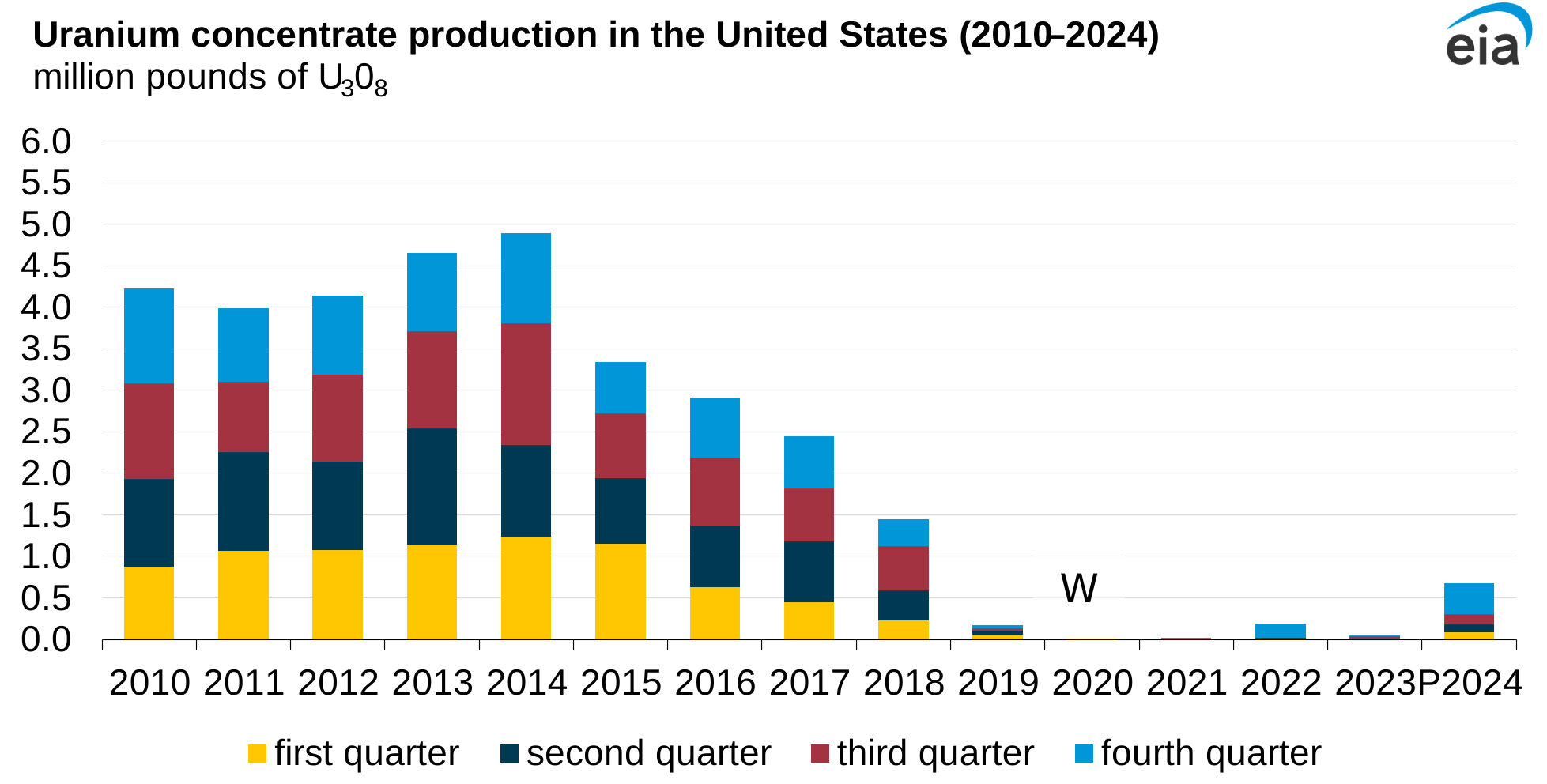
Uranium concentrate production in the United States

Data source: U.S. Energy Information Administration, Form EIA-851A, Domestic Uranium Production Report (Annual), and Form EIA-851Q, Domestic Uranium Production Report (Quarterly)
Note: Data were withheld from second-quarter 2020 to second-quarter 2021. P=preliminary data; W=withheld

Companies in the United States produced more uranium concentrate in 2024 than in any year since 2018 after a sustained period of higher uranium prices spurred production, according to our recently published Domestic Uranium Production Report—Quarterly. The increase largely came from two in-situ recovery facilities, one in Texas and one in Wyoming, and the resumption of uranium production at White Mesa Mill in Utah, the only operational uranium mill in the United States. Production in the fourth quarter of 2024 alone was higher than the total annual production for each of the years in 2019–23.

Energy Fuels’ White Mesa Mill in Utah can produce uranium, rare earth and other minerals, and vanadium, which is used in steelmaking among other purposes. The company’s most recent annual financial disclosure documents report it expects to continue focusing on uranium in 2025.

Uranium concentrate has commercial uses as the fuel for civilian nuclear reactors and in medical applications. Uranium concentrate must be processed in conversion and enrichment facilities before being fabricated in fuel rods or pellets at fuel fabrication plants. These fuel rods or pellets can then be loaded into civilian nuclear reactors.

We publish estimates on the production of domestic uranium in the Domestic Uranium Production Report—Quarterly, along with the status of uranium mills, heap leach facilities, and in-situ recovery plants.

Principal contributors: Tim Shear, M. Tyson Brown

Statistics
Analysis
Tools
Education
News

Petroleum & Other Liquids

Crude oil, gasoline, heating oil, diesel, propane, and other liquids including biofuels and natural gas liquids.

Natural Gas

Exploration and reserves, storage, imports and exports, production, prices, sales.

Electricity

Sales, revenue and prices, power plants, fuel use, stocks, generation, trade, demand & emissions.

Coal

Reserves, production, prices, employment and productivity, distribution, stocks, imports and exports.

Nuclear & Uranium

Uranium fuel, nuclear reactors, generation, spent fuel.

Renewable & Alternative Fuels

Includes hydropower, solar, wind, geothermal, biomass and ethanol.

EIA Survey Forms

Forms EIA uses to collect energy data including descriptions, links to survey instructions, and additional information.

Total Energy

Comprehensive data summaries, comparisons, analysis, and projections integrated across all energy sources.

U.S. States

State energy information, including overviews, rankings, data, and analyses.

International

International energy information, including overviews, rankings, data, and analyses.

Environment

Greenhouse gas data, voluntary reporting, electric power plant emissions.

Data Tools, Apps, & Maps

Tools to customize searches, view specific data sets, study detailed documentation, and access time-series data.

Open Data

EIA's free and open data available as API, Excel add-in, bulk files, and widgets

EIA Beta

Come test out some of the products still in development and let us know what you think!

Open Source Code

EIA's open source code, available on GitHub.

RSS Feeds

Subscribe to feeds for updates on EIA products including Today in Energy and What's New.