U.S. Energy Information Administration logo
Skip to sub-navigation
In-brief analysis
June 10, 2024

NERC reports some U.S. regions at risk for energy shortfalls in extreme summer conditions
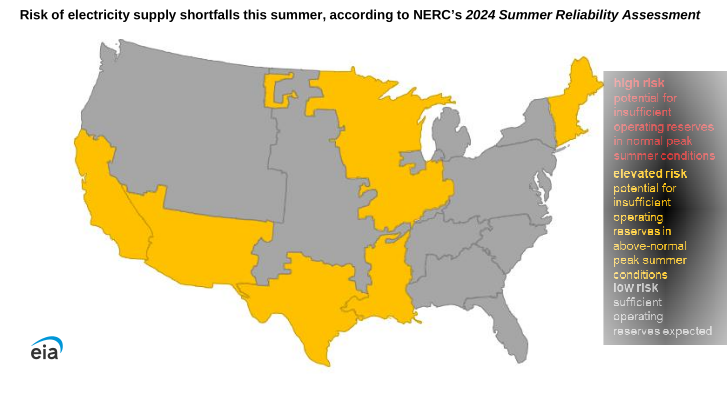
risk of electricity supply shortfalls this summer, according to NERC's summer reliability assessment

Data source: North American Electric Reliability Corporation (NERC), 2024 Summer Reliability Assessment

Parts of the United States could be at risk for electricity supply shortages if electricity demand peaks are higher than anticipated or if less electricity is generated than expected, according to the North American Electric Reliability Corporation’s (NERC) 2024 Summer Reliability Assessment. Under normal summer demand conditions, NERC expects the continental United States to have adequate power resources this year.

No areas of the United States evaluated by NERC were considered high risk this summer, a category that means an area is at risk of outages during normal summer conditions.

Electricity demand increases as temperatures rise and homes and businesses use more air conditioning. Higher-than-normal summer temperatures can affect reliability two ways: by increasing electricity demand for air conditioning and by increasing the risk of power plant outages and reduced output from heat-related issues.

In addition, widespread heat waves can limit the typical movement of electricity because it is needed to meet increased local demand. Transmission can be limited due to the risk of overheating, natural disasters (such as wildfires), and insufficient capacity to carry energy where it needs to go. NERC also highlighted concerns over having enough resources to meet peaks in demand in recent years as baseload generation retirements have increased and variable resources such as solar and wind that have a less stable generation pattern are replacing other power plants.

Certain regions NERC assessed are at elevated risk of electricity supply shortages, which means that these areas could face electricity supply shortfalls during periods of more extreme summer conditions. These areas include parts of California, the Southwest, the Midwest, Texas, and New England.

Principal contributor: Sue Smith

Statistics
Analysis
Tools
Education
News

Petroleum & Other Liquids

Crude oil, gasoline, heating oil, diesel, propane, and other liquids including biofuels and natural gas liquids.

Natural Gas

Exploration and reserves, storage, imports and exports, production, prices, sales.

Electricity

Sales, revenue and prices, power plants, fuel use, stocks, generation, trade, demand & emissions.

Coal

Reserves, production, prices, employment and productivity, distribution, stocks, imports and exports.

Nuclear & Uranium

Uranium fuel, nuclear reactors, generation, spent fuel.

Renewable & Alternative Fuels

Includes hydropower, solar, wind, geothermal, biomass and ethanol.

EIA Survey Forms

Forms EIA uses to collect energy data including descriptions, links to survey instructions, and additional information.

Total Energy

Comprehensive data summaries, comparisons, analysis, and projections integrated across all energy sources.

U.S. States

State energy information, including overviews, rankings, data, and analyses.

International

International energy information, including overviews, rankings, data, and analyses.

Environment

Greenhouse gas data, voluntary reporting, electric power plant emissions.

Data Tools, Apps, & Maps

Tools to customize searches, view specific data sets, study detailed documentation, and access time-series data.

Open Data

EIA's free and open data available as API, Excel add-in, bulk files, and widgets

EIA Beta

Come test out some of the products still in development and let us know what you think!

Open Source Code

EIA's open source code, available on GitHub.

RSS Feeds

Subscribe to feeds for updates on EIA products including Today in Energy and What's New.