
California consumers respond to appeals for electricity conservation during heat wave
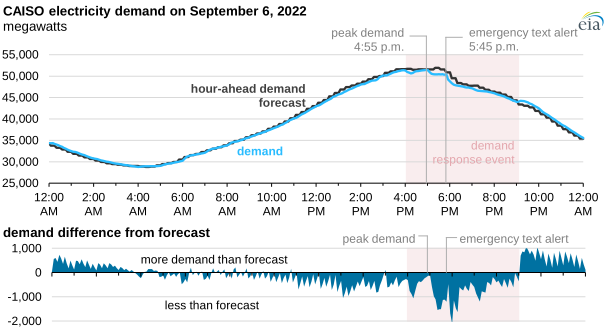
During an extreme heat wave in early September, California’s power grid had trouble meeting record-breaking electricity demand as consumers turned up their air conditioning to keep cool. To avoid rolling blackouts, the California Independent System Operator (CAISO), which manages the grid for most of the state, and state officials issued appeals to consumers throughout the heat wave asking them to conserve electricity to lower demand, activated demand response programs, and relied heavily on natural gas and imported electricity.
When electricity demand in CAISO reached an all-time high of 51,426 megawatts (MW) at 4:55 p.m. on September 6, 2022, CAISO had already issued a Flex Alert asking Californians to conserve energy between 4:00 p.m. and 9:00 p.m., when the grid is most stressed, and had called for formal demand response programs. Shortly after peak load (the highest demand reached during a given period) on September 6, CAISO issued an Energy Emergency Alert Stage 3 (the final step before initiating rolling blackouts) because it had forecast energy deficiencies later in the day.
About an hour after reaching peak load, California’s Office of Emergency Services (CAL-OES) issued the following emergency text alert through the Wireless Emergency Alert system, “Conserve energy now to protect public health and safety. Extreme heat is straining the state energy grid. Power interruptions may occur unless you take action. Turn off or reduce nonessential power if health allows, now until 9pm.” This message was targeted to consumers in counties with high population density that were experiencing extreme heat.
Within five minutes of the text alert, electricity demand in CAISO declined by more than 2,100 MW from the hour-ahead forecast (an electricity demand forecast CAISO uses to position resources for the next hour, based on the most recent weather data). Electricity demand was consistently below the hour-ahead forecast until the demand response event ended at 9:00 p.m., when demand increased above the forecast—an indication that some of the electricity demand shifted to later in the day.
Demand response programs and other appeals for public conservation are often designed to shift load from times of high grid strain to later in the evening when temperatures (and air-conditioning demand) is lower. Some examples of these types of programs in California include:
- Formal demand response programs managed by electric utilities and third-party providers, which provide financial incentives for consumers to reduce demand when called upon
- CAISO’s Flex Alert program, which calls for voluntary reduction of energy use in homes and businesses (Flex Alerts are issued on days when the grid is expected to be heavily used.)
- CAL-OES’s Wireless Emergency Alerts program, which sends advance warnings for emergencies, such as high grid use or power outages
CAISO’s prior peak load (50,270 MW) was set on July 24, 2006. The last time CAISO issued an Energy Emergency Alert 3 was in August 2020, when it instituted rotating outages during an extreme heat wave that affected California and much of the western United States.
Principal contributor: M. Tyson Brown