
Both U.S. imports and exports of several transportation fuels fell in 2020
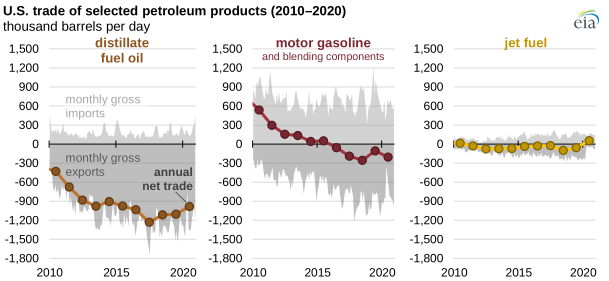
Global responses to the COVID-19 pandemic substantially reduced trade of many petroleum products to and from the United States during the first half of 2020. Exports of selected petroleum products mainly consumed as transportation fuels—distillate fuel oil, motor gasoline, and jet fuel—collectively declined by 14%, or 344,000 barrels per day (b/d), in 2020. U.S. imports of those fuels collectively declined by 18%, or 211,000 b/d, in 2020. These three fuels accounted for 24% of total U.S. petroleum exports (crude oil and petroleum products) and 12% of total U.S. petroleum imports in 2020, according to EIA’s Petroleum Supply Monthly.
Distillate fuel had long been the top petroleum product exported from the United States, but in 2020 propane exports surpassed distillate fuel exports. Exports of distillate fuel oil in 2020 decreased to 1.2 million b/d, down 8% compared with 2019. Mexico, Brazil, and Chile ranked as the top three destination countries for U.S. distillate exports in 2020.
U.S. imports of distillate fuel oil increased 7% to 216,000 b/d in 2020, reaching the highest level recorded since 2010. More than half of U.S. distillate imports in 2020 came from Canada. The United States has been a net distillate exporter (exporting more than was imported) in every year since 2008.
U.S. imports and exports of gasoline, including finished gasoline and gasoline blending components, both declined in 2020. U.S. imports of gasoline—mostly gasoline blending components from countries such as Canada, India, and the Netherlands—decreased 27% to 584,000 b/d. U.S. exports of gasoline—mostly finished gasoline sent to Mexico—decreased by 12% to 790,000 b/d. The United States has been a net gasoline exporter since 2016.
In 2020, the United States imported 150,000 b/d of jet fuel, down 9% from 2019, and exported 95,000 b/d, down 57% from 2019. As a result, the United States was a net importer of jet fuel in 2020 for the first time in a decade. Canada and Mexico are the main destinations for U.S. jet fuel exports, and slightly more than half of U.S. jet fuel imports in 2020 came from South Korea.
Principal contributor: Kevin Hack