
What we pay for in a gallon of regular gasoline
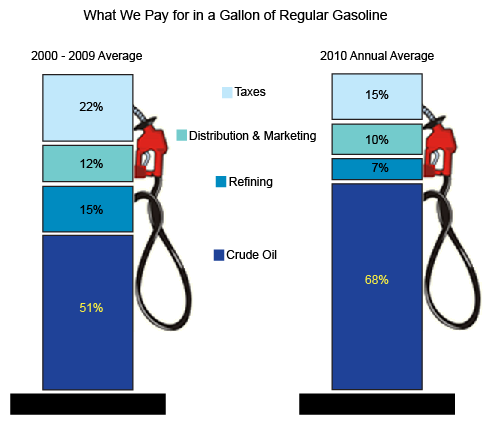
Crude oil, refining, distribution & marketing, and taxes are the four major cost components for estimates of the retail price of a gallon of gasoline:
- Crude oil - the major feedstock used to produce gasoline. This portion of the gasoline price is represented by the cost of crude oil purchased by refiners.
- Refining - processing the crude oil into gasoline. The refining portion of the gasoline price is the spread between the cost of crude oil purchased by refiners and the wholesale price of gasoline. This spread represents both the costs and profits associated with the refining process.
- Distribution & Marketing (Retail) - the part of the supply chain where wholesale gasoline is brought to a retail station and sold to the final consumer. This portion of the gasoline price is the retail price minus the other three price components. It represents both the costs and profits associated with selling retail gasoline to the final consumer.
- Taxes - The Federal Government levies a tax of 18.4 cents on each gallon of gasoline, and the States levy an average tax of 22 cents on each gallon. This does not account for all State and local taxes, such as sales taxes, so this component, ranging from 7.5 to 37.5 cents per gallon across States, is probably understated (and the Distribution and Marketing component correspondingly overstated).
The portion of the gasoline price each of these components accounts for can vary significantly over time. Crude oil is typically the largest cost component of gasoline, and its share of the price of a gallon of gasoline was significantly higher in 2010 than it was, on average, over the 2000-2009 period. As shown in the data history, crude oil costs climbed to over 75% of the price of gasoline during the period of quickly-rising prices in late 2007 through mid-2008.
The refining component and the distribution and marketing component can also vary. They vary over longer periods due to refining market economics and petroleum product demand. They can also vary in the short term since there is typically a lag between changes in the spot price of wholesale gasoline and the retail price of gasoline. For example, if spot prices increase for wholesale gasoline, the impact of that change is not immediately passed through to retail prices. At that point in the price cycle, with increased spot prices and lagging retail prices (assuming constant crude oil prices), the refining component would expand while the distribution and marketing component would contract.
Tags: crude oil, gasoline, liquid fuels, oil/petroleum, prices, refining, taxes