U.S. Energy Information Administration logo
Skip to sub-navigation
February 25, 2021

Texas natural gas production fell by almost half during recent cold snap
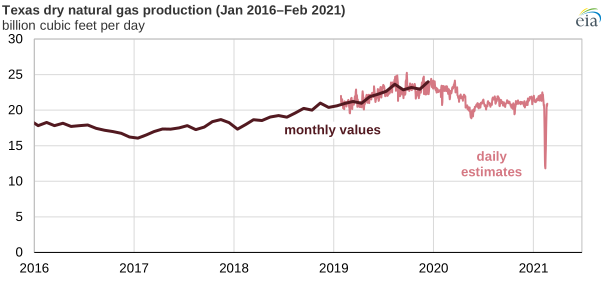
Texas dry natural gas production
Source: U.S. Energy Information Administration, Natural Gas Monthly, and daily estimates from IHS Markit

During the cold snap that affected much of the central part of the country, U.S. dry natural gas production fell to as low as 69.7 billion cubic feet per day (Bcf/d) on February 17, a decline of 21%, or down nearly 18.9 Bcf/d from the week ending February 13. Natural gas production in Texas fell almost 45% from 21.3 Bcf/d during the week ending February 13 to a daily low of 11.8 Bcf/d on Wednesday, February 17, according to estimates from IHS Markit. Temperatures in Texas averaged nearly 30 degrees Fahrenheit lower than normal during the week of February 14.
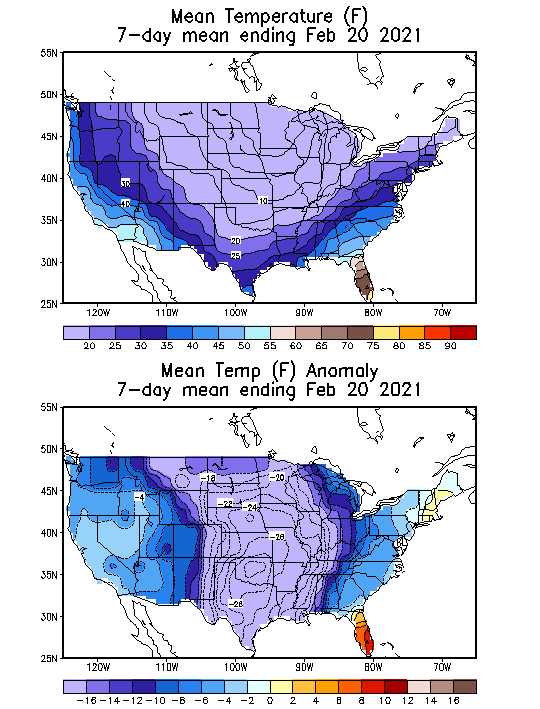
The decline in natural gas production was mostly a result of freeze-offs, which occur when water and other liquids in the raw natural gas stream freeze at the wellhead or in natural gas gathering lines near production activities. Unlike the relatively winterized natural gas production infrastructure in northern areas of the country, natural gas production infrastructure, such as wellheads, gathering lines, and processing facilities, in Texas are more susceptible to the effects of extremely cold weather.

After reaching a daily low on February 17, natural gas production in Texas began increasing as temperatures started to rise. Daily production reached an estimated 20.9 Bcf/d on February 24, only about 0.3 Bcf/d lower than the average in the week ending February 13.

Principal contributor: Stephen York

Statistics
Analysis
Tools
Education
News

Petroleum & Other Liquids

Crude oil, gasoline, heating oil, diesel, propane, and other liquids including biofuels and natural gas liquids.

Natural Gas

Exploration and reserves, storage, imports and exports, production, prices, sales.

Electricity

Sales, revenue and prices, power plants, fuel use, stocks, generation, trade, demand & emissions.

Coal

Reserves, production, prices, employment and productivity, distribution, stocks, imports and exports.

Nuclear & Uranium

Uranium fuel, nuclear reactors, generation, spent fuel.

Renewable & Alternative Fuels

Includes hydropower, solar, wind, geothermal, biomass and ethanol.

EIA Survey Forms

Forms EIA uses to collect energy data including descriptions, links to survey instructions, and additional information.

Total Energy

Comprehensive data summaries, comparisons, analysis, and projections integrated across all energy sources.

U.S. States

State energy information, including overviews, rankings, data, and analyses.

International

International energy information, including overviews, rankings, data, and analyses.

Environment

Greenhouse gas data, voluntary reporting, electric power plant emissions.

Data Tools, Apps, & Maps

Tools to customize searches, view specific data sets, study detailed documentation, and access time-series data.

Open Data

EIA's free and open data available as API, Excel add-in, bulk files, and widgets

EIA Beta

Come test out some of the products still in development and let us know what you think!

Open Source Code

EIA's open source code, available on GitHub.

RSS Feeds

Subscribe to feeds for updates on EIA products including Today in Energy and What's New.