U.S. Energy Information Administration logo
Skip to sub-navigation
October 17, 2011

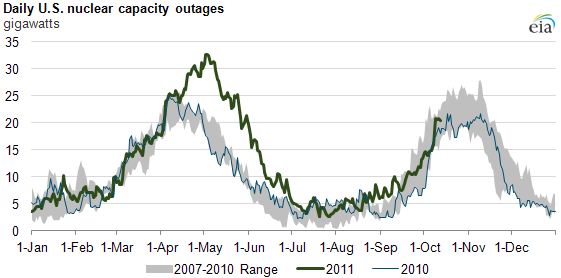
Nuclear outages back within typical range since July following springtime surge

graph of nuclear outages back within typical range since July following springtime surge, as described in the article text
Source: U.S. Energy Information Administration, based on data from the U.S. Nuclear Regulatory Commission, Power Reactor Status Reports.
Download CSV Data

U.S. nuclear generator outages were above the levels of the previous four years in the second quarter of 2011 but have returned to more typical seasonal levels since the start of July 2011.

Like most electric generators, nuclear reactor operators typically schedule maintenance in the spring and the fall to help ensure that the reactors are available to meet peak electric demand in the summer and winter.

Spring 2011 nuclear outages were unusually high due to the confluence of the refueling season and several forced outages, including outages due to weather events (such as tornadoes or flooding). Outages in recent months have largely trended within the 2007-2010 range.

Notable units in extended outage include:

  • Both of Dominion Power's North Anna reactors in Virginia remain offline following the earthquake on August 23.
  • Omaha Public Power District's Fort Calhoun reactor initially went offline on April 10 for refueling and has since remained offline due to flooding on the Missouri River.
  • Progress Energy Florida's Crystal River unit three has been offline since September 2009 to repair the reactor containment. After evaluating whether the unit should be repaired, Progress announced it will spend $0.9 to $1.3 billion to bring the unit back online in 2014.
Statistics
Analysis
Tools
Education
News

Petroleum & Other Liquids

Crude oil, gasoline, heating oil, diesel, propane, and other liquids including biofuels and natural gas liquids.

Natural Gas

Exploration and reserves, storage, imports and exports, production, prices, sales.

Electricity

Sales, revenue and prices, power plants, fuel use, stocks, generation, trade, demand & emissions.

Coal

Reserves, production, prices, employment and productivity, distribution, stocks, imports and exports.

Nuclear & Uranium

Uranium fuel, nuclear reactors, generation, spent fuel.

Renewable & Alternative Fuels

Includes hydropower, solar, wind, geothermal, biomass and ethanol.

EIA Survey Forms

Forms EIA uses to collect energy data including descriptions, links to survey instructions, and additional information.

Total Energy

Comprehensive data summaries, comparisons, analysis, and projections integrated across all energy sources.

U.S. States

State energy information, including overviews, rankings, data, and analyses.

International

International energy information, including overviews, rankings, data, and analyses.

Environment

Greenhouse gas data, voluntary reporting, electric power plant emissions.

Data Tools, Apps, & Maps

Tools to customize searches, view specific data sets, study detailed documentation, and access time-series data.

Open Data

EIA's free and open data available as API, Excel add-in, bulk files, and widgets

EIA Beta

Come test out some of the products still in development and let us know what you think!

Open Source Code

EIA's open source code, available on GitHub.

RSS Feeds

Subscribe to feeds for updates on EIA products including Today in Energy and What's New.