
Hurricane Harvey caused electric system outages and affected wind generation in Texas
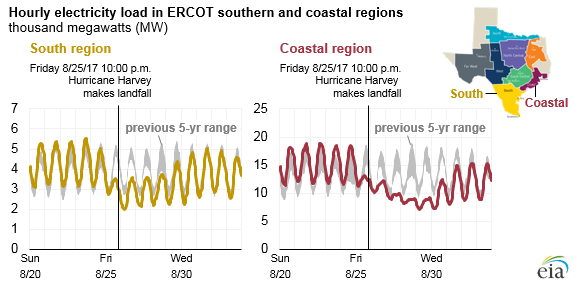
Hurricane Harvey caused substantial electricity outages, as power plants and transmission infrastructure—particularly in south Texas and along the Gulf Coast—were affected by high winds and significant flooding. At its peak, more than 10,000 megawatts (MW) of electricity generating capacity in the Electric Reliability Council of Texas (ERCOT) grid and a substantial number of transmission and distribution lines experienced forced outages. At the same time, relatively cool temperatures across much of Texas also reduced electricity demand.
Power plant outages were largely caused by rain or flooding affecting generator fuel supplies, outages of transmission infrastructure connecting generators to the grid, and personnel not being able to reach generating facilities.
Hundreds of high-voltage transmission lines, including six 345 kilovolt (kV) lines and more than two hundred 69 kV–138 kV lines experienced storm-related forced outages. Most of these transmission facilities were located in the immediate area along the Gulf Coast of Texas where the hurricane made landfall, but some were in the Houston area, where transmission facilities were damaged by flooding.
Electricity demand in ERCOT was significantly lower than usual for the time of year mainly because of the customer outages in storm-affected areas in south Texas and along the Gulf Coast and cooler temperatures across much of the state. Daily maximum temperatures in many parts of the state were in the high 90s to above 100 degrees Fahrenheit during the week before and fell to the 70s and 80s during the hurricane. Despite the significant amount of generator outages, ERCOT was able to meet total electricity demand in part because of the lower levels of demand.
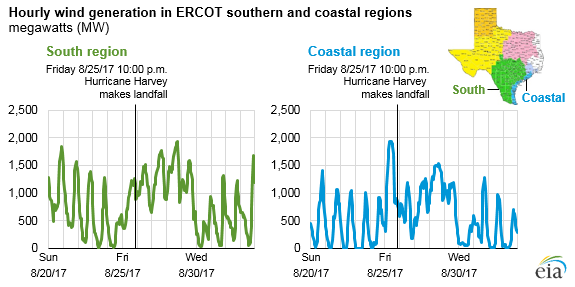
Sustained wind speeds reached 130 miles per hour (mph) as Hurricane Harvey made landfall near Rockport, Texas around 10:00 p.m. on Friday, August 25, 2017. In advance of landfall, electricity generation from wind turbines in the coastal region increased dramatically early Friday, as hurricane winds began reaching the area.
Wind turbines are commonly shut off at wind speeds of about 55 mph and higher to protect them from damage, and several turbines in ERCOT’s coastal area were shut off. ERCOT’s southern region saw increased levels of wind generation during the four days after landfall when wind speeds were relatively high but below 55 mph.
Principal contributors: April Lee, Tyler Hodge
Tags: capacity, consumption/demand, disruption, distribution, electric power grid, electricity, generating capacity, generation, Gulf Coast, Gulf of Mexico, ISO (independent system operator), outages, power plants, renewables, RTO (regional transmission organization), states, Texas, transmission, weather, wholesale power, wind