
U.S. petroleum consumption decreased to a 25-year low in 2020
Note: Click for full U.S. petroleum products chart.
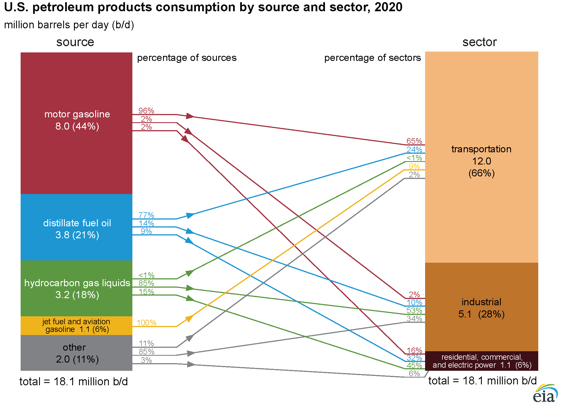
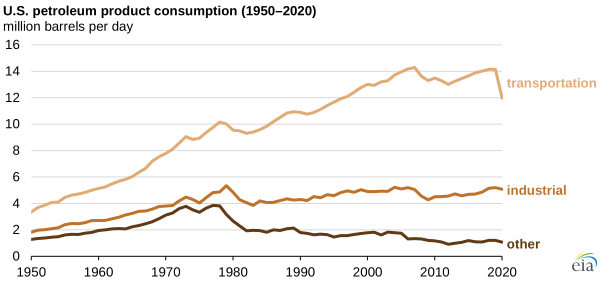
In 2020, 18.1 million barrels per day (b/d) of petroleum products were consumed in the United States, a 25-year low. From 2019 to 2020, petroleum consumption decreased in every energy-consuming sector, and it decreased a record 15% in the transportation sector. Our new U.S. petroleum products consumption by source and sector chart shows how much petroleum by source was consumed in each sector.
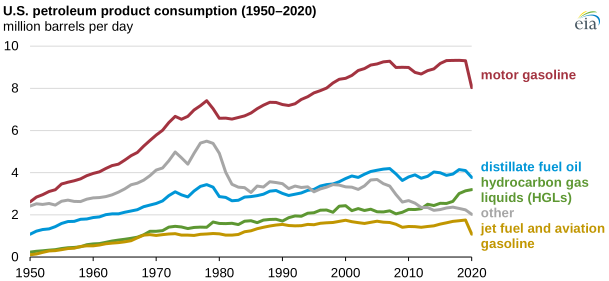
Responses to the COVID-19 pandemic were the main drivers of the decline in petroleum consumption, particularly for transportation fuels. Hydrocarbon gas liquids (HGLs) were one of the few petroleum product categories to see increased consumption in 2020. HGLS are primarily used to make plastics instead of being consumed as fuel.
Motor gasoline, the most-consumed petroleum product in the United States, accounted for 44% of U.S. petroleum consumption in 2020. Most gasoline consumption in the United States occurs in the transportation sector (96%), and the industrial and commercial sectors consume the rest. In 2020, U.S. gasoline consumption decreased to 8 million b/d, down 14% from 2019, to the lowest level since 1997.
Distillate fuel oil, or diesel fuel, accounted for 21% of U.S. petroleum consumption in 2020. Diesel is consumed in every sector, but more than three-quarters is consumed in the transportation sector, mostly by commercial trucks, ships, and trains. U.S. diesel consumption decreased 8% from 2019 to 2020.
Hydrocarbon gas liquids accounted for 18% of total U.S. petroleum consumption in 2020. Last year, HGL consumption reached a record-high 3.2 million b/d. Propane makes up 25% of total HGL consumption, and it is consumed in the residential, commercial, industrial, and transportation sectors. The remaining 75% is primarily consumed as chemical feedstock for making plastics in the industrial sector.
Jet fuel and aviation gasoline accounted for 6% of total U.S. petroleum consumption in 2020. Jet fuel consumption decreased 62% from 2019 to 2020 (the largest decrease of any petroleum product last year) to its lowest level since 1983. Aviation gasoline also decreased by 18%. Both fuels are entirely consumed by the transportation sector.
Principal contributor: Bill Sanchez