
In 2019, the U.S. imported $13 billion of energy goods from Mexico, exported $34 billion
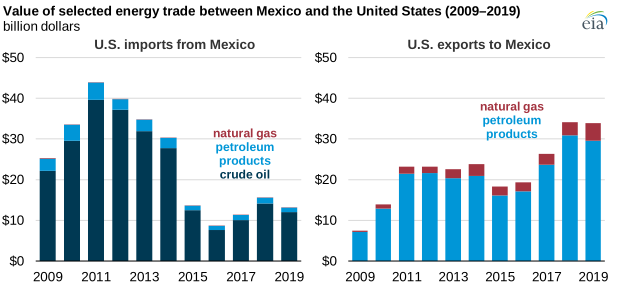
In every year since 2015, the value of U.S. energy exports to Mexico has exceeded the value of energy imports from Mexico. In 2019, the value of selected energy imports—crude oil, petroleum products, and natural gas—fell to $13 billion, and the value of energy exports remained nearly equal to the 2018 value of $34 billion.
In 2019, energy trade accounted for 13% of the value for all U.S. exports to Mexico and 4% of all U.S. imports from Mexico, based on the latest annual Standard International Trade Classification (SITC) data from the U.S. Census Bureau. The value of U.S. petroleum products—now the largest component of energy trade with Mexico on a value basis—has increased from $7 billion in 2009 to nearly $30 billion in 2019, slightly less than its record high value in 2018.
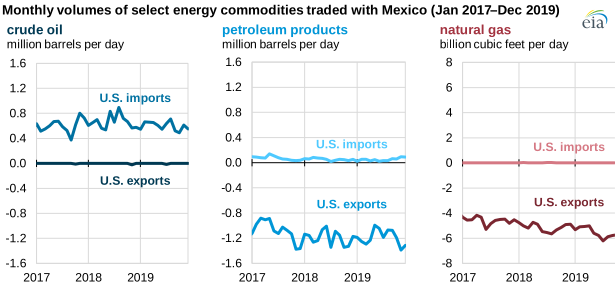
Crude oil accounts for most of the value of U.S. energy imports from Mexico. U.S. crude oil imports from Mexico averaged 599,000 barrels per day (b/d) in 2019. Mexico is the United States’ second-largest import source, behind only Canada. The value of U.S. crude oil imports from Mexico fell from $14 billion in 2018 to $12 billion in 2019.
Petroleum products, such as finished motor gasoline and distillate fuel oil, account for most of the value of U.S. energy exports to Mexico. In 2019, Mexico received 1.2 million b/d of petroleum products from the United States, valued at more than $29 billion. U.S. gasoline exports now supply more than half of Mexico’s gasoline consumption.
Natural gas trade is dominated by pipeline shipments between the United States and Mexico. U.S. natural gas exports to Mexico averaged 5.5 billion cubic feet per day (Bcf/d) in 2019, 93% of which was sent through pipelines. The remaining portion was either shipped as liquefied natural gas (LNG), or, even more rarely, delivered by truck.
In late 2019, the United States, Canada, and Mexico signed a trade agreement (USMCA) that went into effect on July 1, 2020. According to a report from the International Trade Commission, the USMCA will likely have little effect on U.S.-Mexico energy trade.
Principal contributors: Natalie Kempkey, ShaMyra Sylvester