U.S. Energy Information Administration logo
Skip to sub-navigation
October 2, 2015

Hurricane Joaquin may cause problems for East Coast energy infrastructure
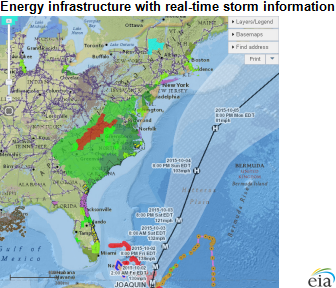
map of energy infrastructure with real-time storm information, as explained in the article text
Source: U.S. Energy Information Administration, Energy Disruptions

Hurricane Joaquin, which strengthened to a Category 4 storm on Thursday, is on track to move north along the East Coast this weekend, potentially bringing torrential rainfall and flooding to the region. To help analysts assess potential storm effects, EIA maintains an energy disruptions map that displays energy infrastructure and real-time storm information.

Because of the storm's proximity to the coast, high winds, rainfall, and flooding will potentially affect energy infrastructure such as power transmission and distribution lines, petroleum refineries, natural gas processing plants, and distribution terminals. Portions of 11 states along the East Coast have already experienced heavy rainfall and, in some cases, flooding prior to Hurricane Joaquin, all from an on-land storm system moving through the region. Hurricane Joaquin could amplify these effects, even if the storm does not make landfall. Governors in Virginia, Maryland, New Jersey, South Carolina, and North Carolina have declared states of emergency ahead of the storm's arrival.

Hurricane Sandy, the last major storm to affect this region, had major impacts on energy infrastructure in October 2012. Downed power lines and flooded electric substations contributed to more than eight million customers losing power. Fuel distribution networks and crude oil and petroleum product terminals were damaged, and the lack of power caused many service stations to be unable to pump gasoline.

Users can continue to track the storm and nearby energy infrastructure on EIA's energy disruptions map, and keep updated on any storm-related outages with the U.S. Department of Energy's Energy Assurance Daily.

Principal contributor: EIA Staff

Statistics
Analysis
Tools
Education
News

Petroleum & Other Liquids

Crude oil, gasoline, heating oil, diesel, propane, and other liquids including biofuels and natural gas liquids.

Natural Gas

Exploration and reserves, storage, imports and exports, production, prices, sales.

Electricity

Sales, revenue and prices, power plants, fuel use, stocks, generation, trade, demand & emissions.

Coal

Reserves, production, prices, employment and productivity, distribution, stocks, imports and exports.

Nuclear & Uranium

Uranium fuel, nuclear reactors, generation, spent fuel.

Renewable & Alternative Fuels

Includes hydropower, solar, wind, geothermal, biomass and ethanol.

EIA Survey Forms

Forms EIA uses to collect energy data including descriptions, links to survey instructions, and additional information.

Total Energy

Comprehensive data summaries, comparisons, analysis, and projections integrated across all energy sources.

U.S. States

State energy information, including overviews, rankings, data, and analyses.

International

International energy information, including overviews, rankings, data, and analyses.

Environment

Greenhouse gas data, voluntary reporting, electric power plant emissions.

Data Tools, Apps, & Maps

Tools to customize searches, view specific data sets, study detailed documentation, and access time-series data.

Open Data

EIA's free and open data available as API, Excel add-in, bulk files, and widgets

EIA Beta

Come test out some of the products still in development and let us know what you think!

Open Source Code

EIA's open source code, available on GitHub.

RSS Feeds

Subscribe to feeds for updates on EIA products including Today in Energy and What's New.