
The 250-year history of U.S. energy consumption
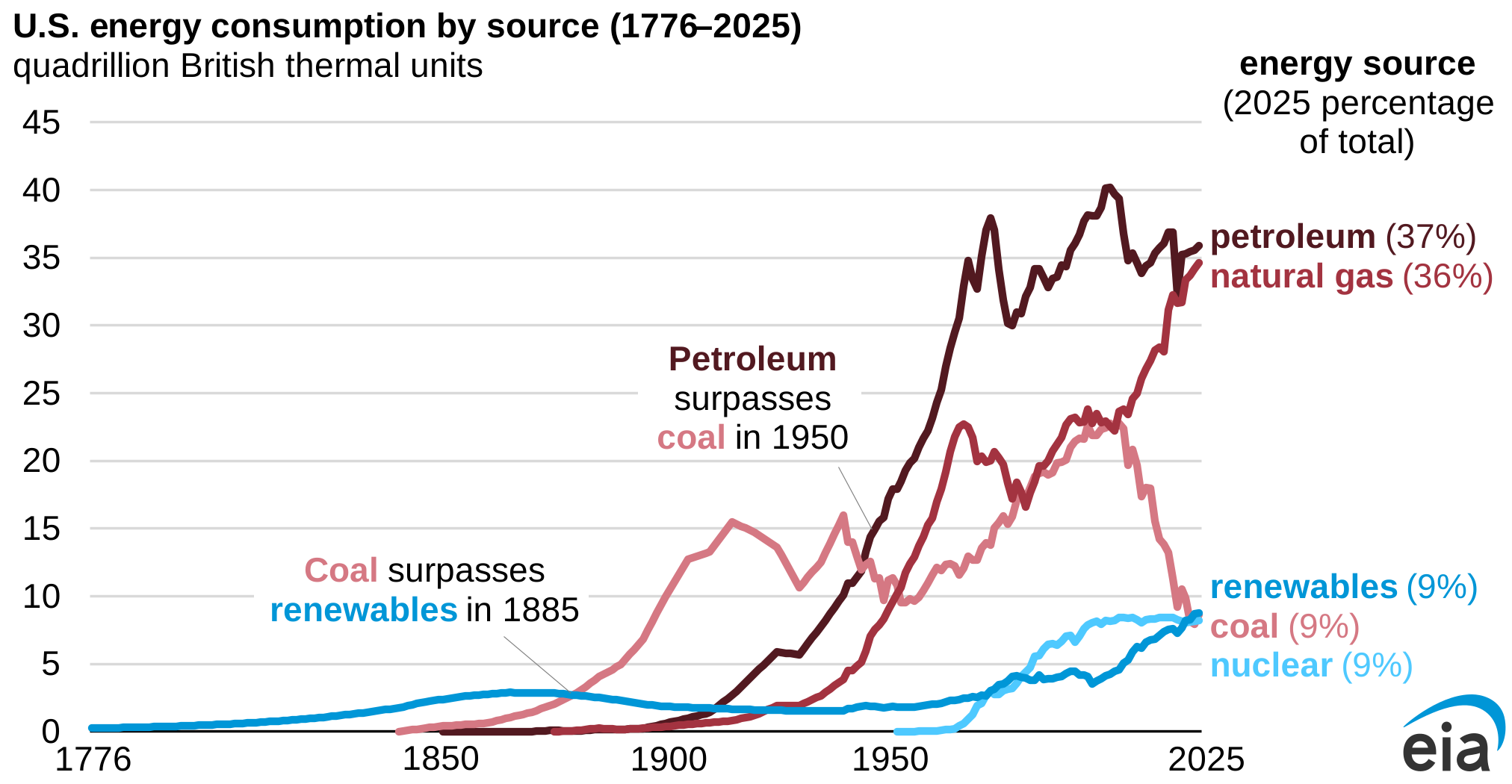
Data Values: Primary Energy Consumption by Source and Estimated primary energy consumption in the United States, selected years, 1635–1945
Video: Video summary of the 250-year history of energy in the United States
Over the 250-year history of our nation, energy consumption has evolved from wood use in the 18th and 19th centuries to today’s use of modern renewable, hydrocarbon, and nuclear technology. In 2025, total energy used in the United States was 96 quadrillion British thermal units (quads), up 2% from 2024, but below 2007’s record 99 quads. Petroleum was the most-used energy source last year, followed closely by natural gas. Use of renewable, coal, and nuclear energy each made up about 9% of total energy use.
Read More ›U.S. refining capacity decreased during 2025
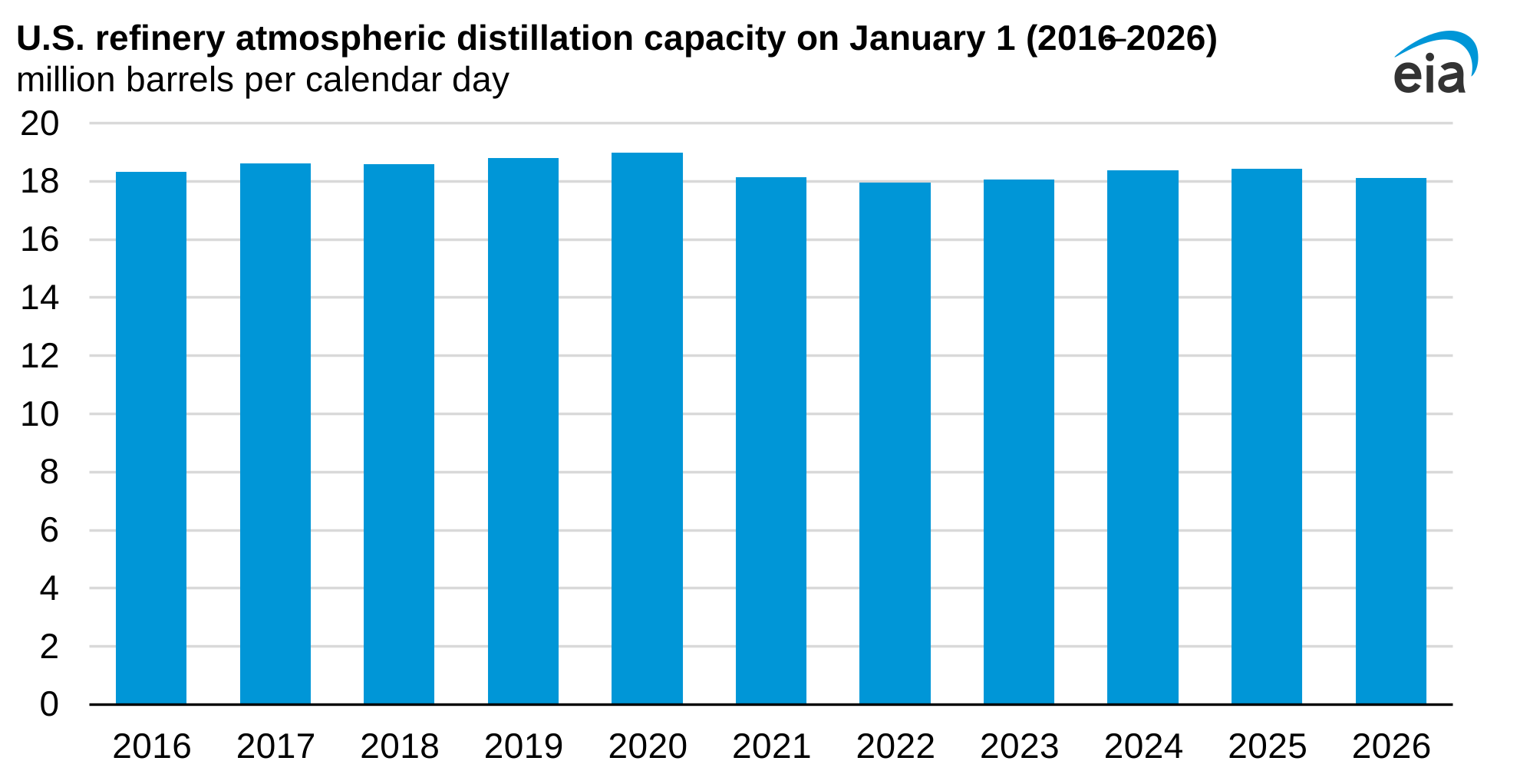
Note: Data reflect refinery capacity as of January 1 of the indicated year.
U.S. operable atmospheric distillation capacity, the primary measure of refinery capacity, totaled 18.2 million barrels per calendar day (b/cd) on January 1, 2026—down over 250,000 b/cd (about 1%) compared with January 1, 2025—according to our latest annual Refinery Capacity Report.
Read More ›Tags: refinery capacity, capacity, refineries, refining
Metered electricity demand in the New York ISO falls midday because of small-scale solar
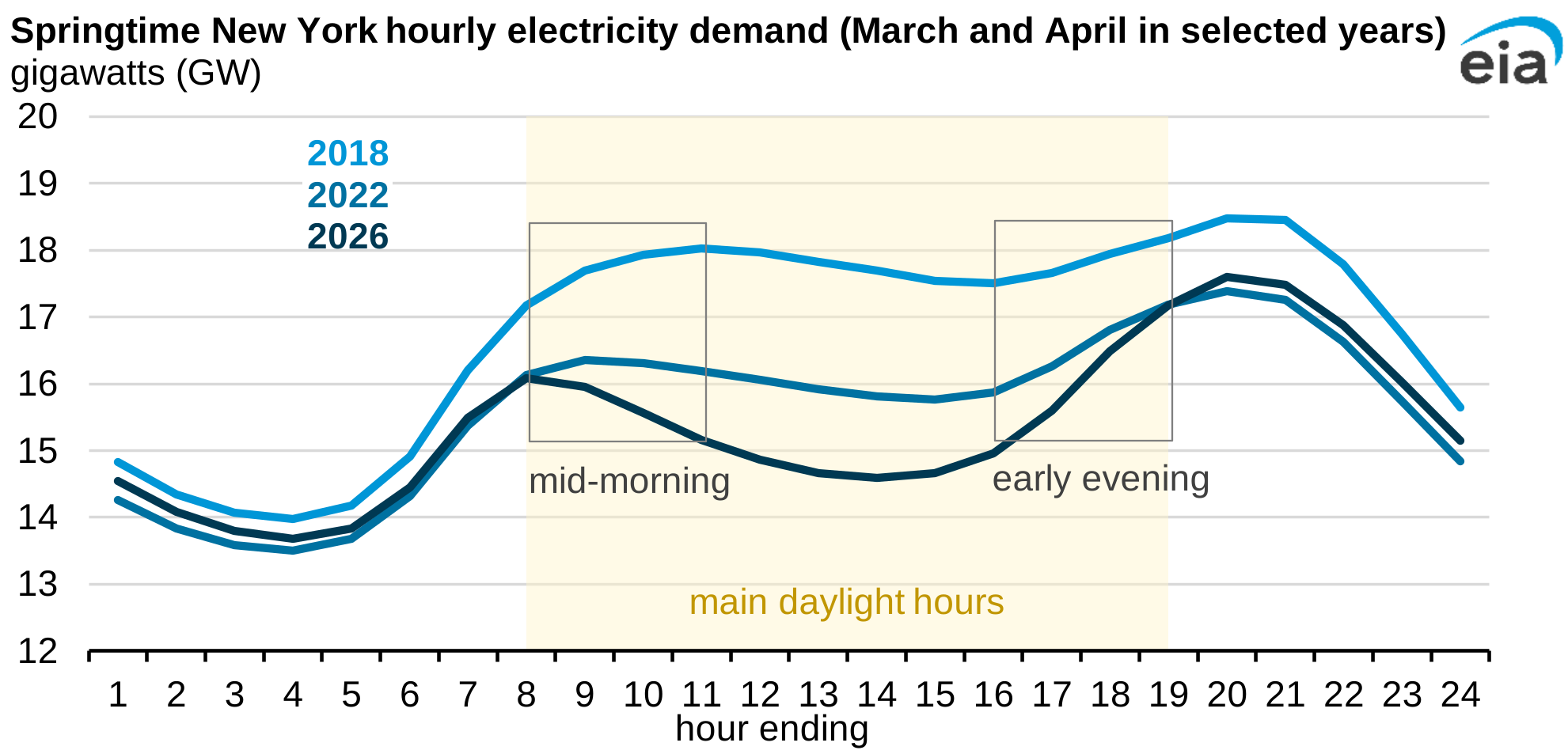
An increase in electricity generation from small-scale solar in New York has decreased the midday demand for metered electricity, amid overall declining load in the state. The trend is particularly notable in the early spring (March and April), when solar generation has an outsized impact because demand is relatively low and conditions for solar generation are favorable.
Read More ›Tags: New York, electricity, solar
U.S. commercial crude oil inventories have decreased in June

Note: Commercial crude oil stocks do not include oil in the Strategic Petroleum Reserve
For the week ending June 19, 2026, U.S. refineries processed 17.1 million barrels per day (b/d) of crude oil, down 81,000 b/d from the previous week, and they operated at 96.1% capacity utilization. Gasoline production averaged 9.5 million b/d, and distillate production increased to 5.2 million b/d.
Read More ›Tags: crude oil, inventories/stocks
UAE’s exit from OPEC+ reduced the group’s share of crude oil production and capacity
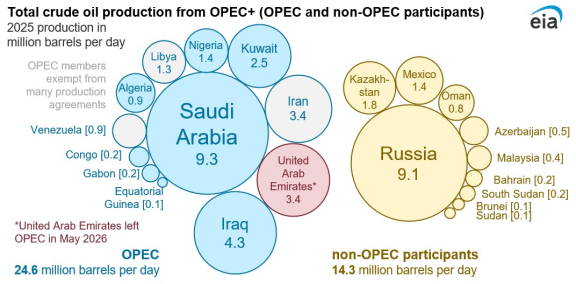
On April 28, 2026, the United Arab Emirates (UAE) announced that it was leaving OPEC, effective on May 1. OPEC was formed in 1960 by Iraq, Iran, Kuwait, Saudi Arabia, and Venezuela, with the stated objective to “coordinate and unify petroleum policies among Member Countries.” OPEC is best known for its effect on global crude oil prices.
Read More ›Permian natural gas production increased faster than crude oil
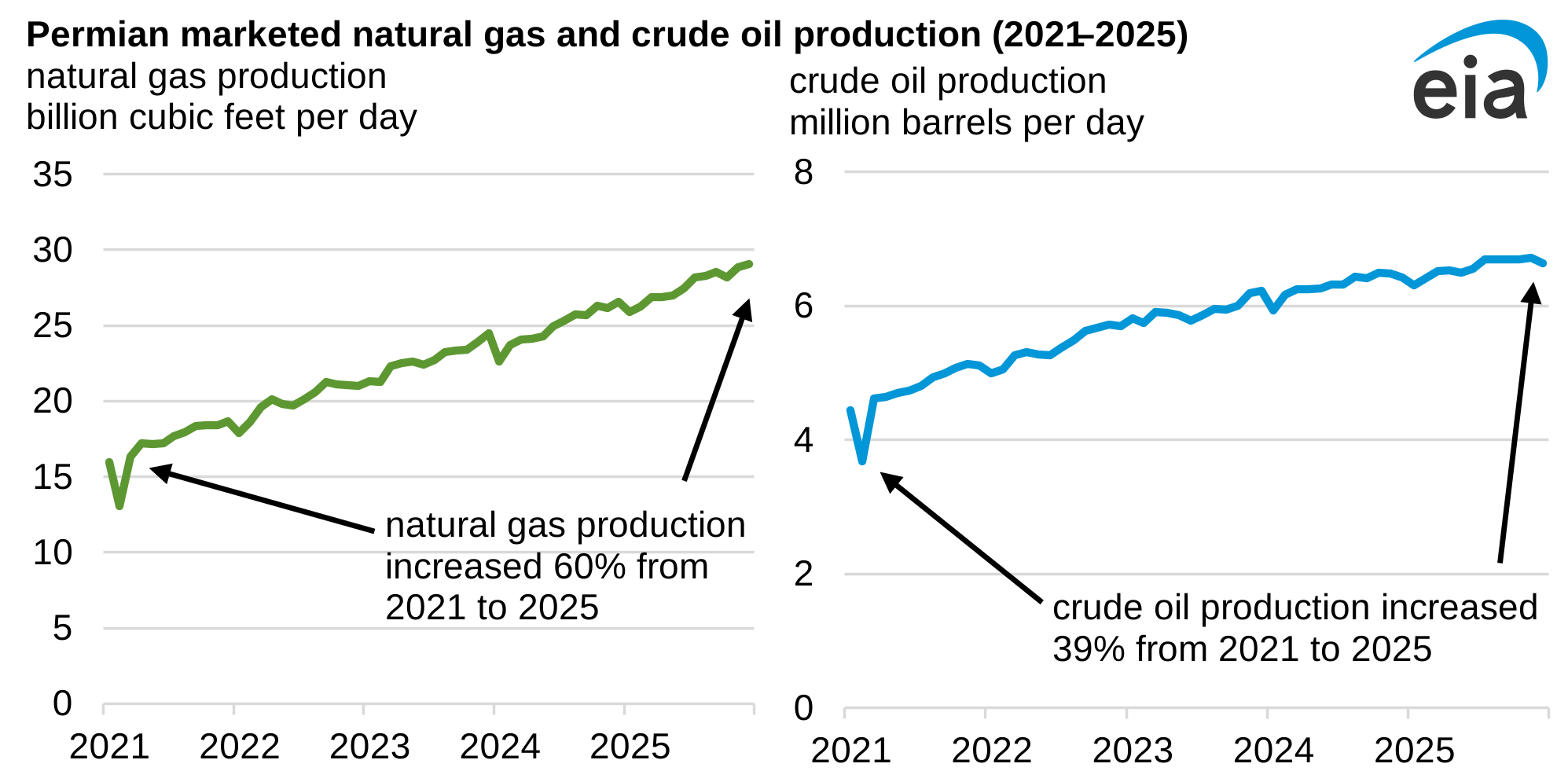
The Permian region’s marketed natural gas production grew from 17.2 billion cubic feet per day (Bcf/d) in 2021 to 27.6 Bcf/d in 2025, a 60% increase, according to data from our latest Short Term Energy Outlook. Over the same period, crude oil production grew by 39%, going from 4.7 million barrels per day (b/d) to 6.6 million b/d. The higher growth in natural gas production is the result of increasing gas-oil ratios (GOR).
Read More ›Solar generation in CAISO surpassed natural gas in the first five months of 2026

Note: CAISO=California Independent System Operator
In the first five months of 2026, utility-scale solar generation surpassed natural gas generation in CAISO. Solar electricity generation in the California Independent System Operator (CAISO) over the first five months of 2026 increased 21% compared with the same period in 2024, and natural gas generation decreased by 60%, data from our Hourly Electric Grid Monitor shows.
Read More ›Tags: solar, natural gas, generation, California, electric generation
Largest wind farm in the United States slated to begin commercial operations
U.S. generating capacity for onshore wind farms
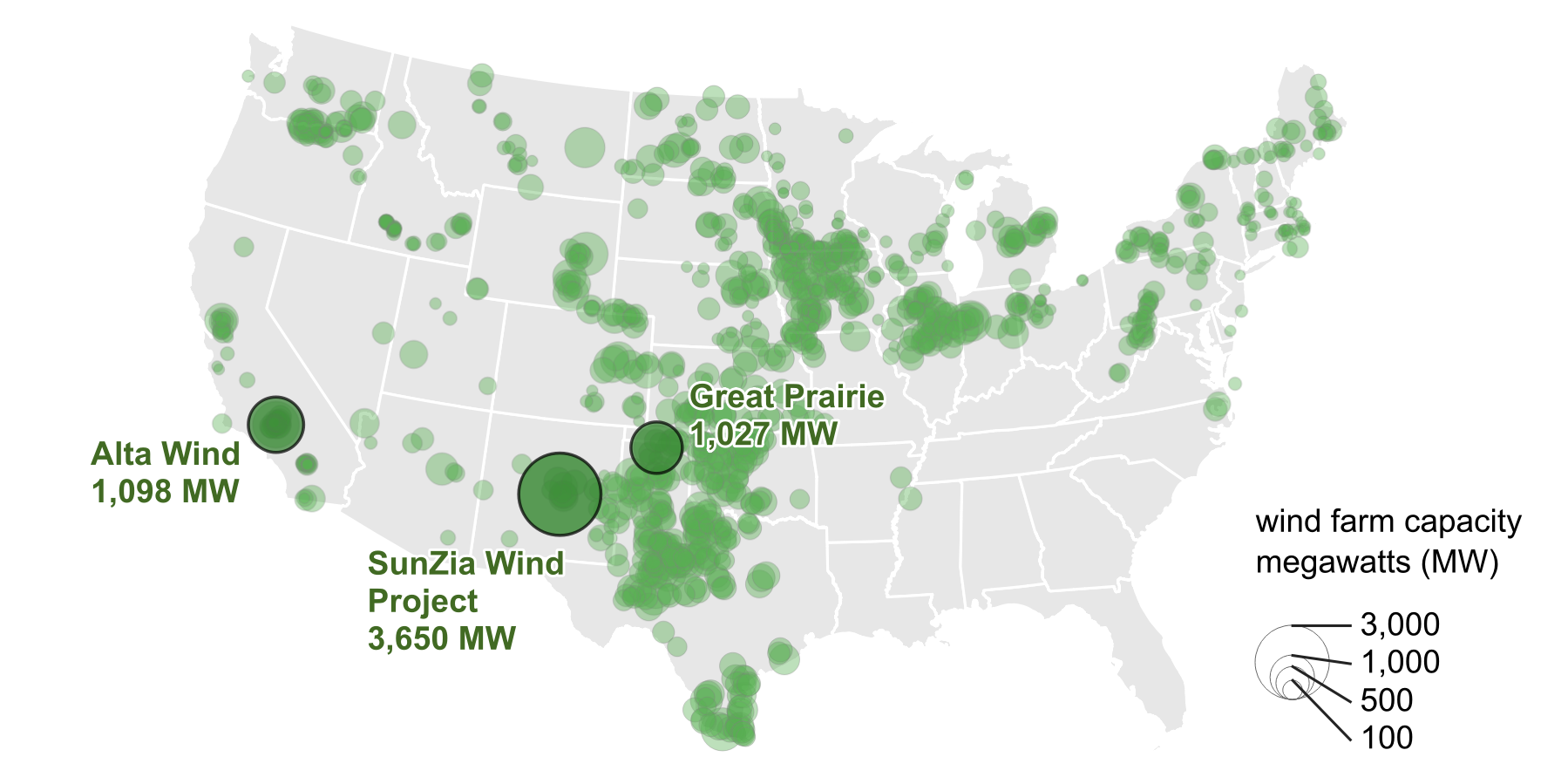
The SunZia Wind Project, the largest wind farm in the United States, is slated to begin commercial operations this month. The wind farm, located in New Mexico, has a total net summer generating capacity of 3,650 megawatts (MW) and is composed of 916 wind turbines. SunZia’s capacity is more than three times larger than the next two largest wind farms, Alta Wind in Southern California (1,098 MW) and Great Prairie in northern Texas (1,027 MW). The SunZia Wind Project works with a high voltage transmission line to deliver the wind power generated to Arizona and California.
Read More ›Tags: commercial, generating capacity, wind, New Mexico
Higher blending targets drive RIN prices close to record highs

Note: RIN=renewable identification number; real prices are adjusted to May 2026 dollars.
Compliance credits for biomass-based diesel and ethanol have doubled in value since the start of this year. The credits, known as renewable identification numbers (RINs), have increased in price, mostly because of higher U.S. biofuel blending targets. The combination of high RIN prices and rising motor gasoline and diesel fuel prices has created an especially favorable market for producing and blending biofuels.
Read More ›Tags: RIN, spot prices, diesel, ethanol, biomass, biofuels, Gulf Coast
U.S. jet fuel production rises after prices doubled in March
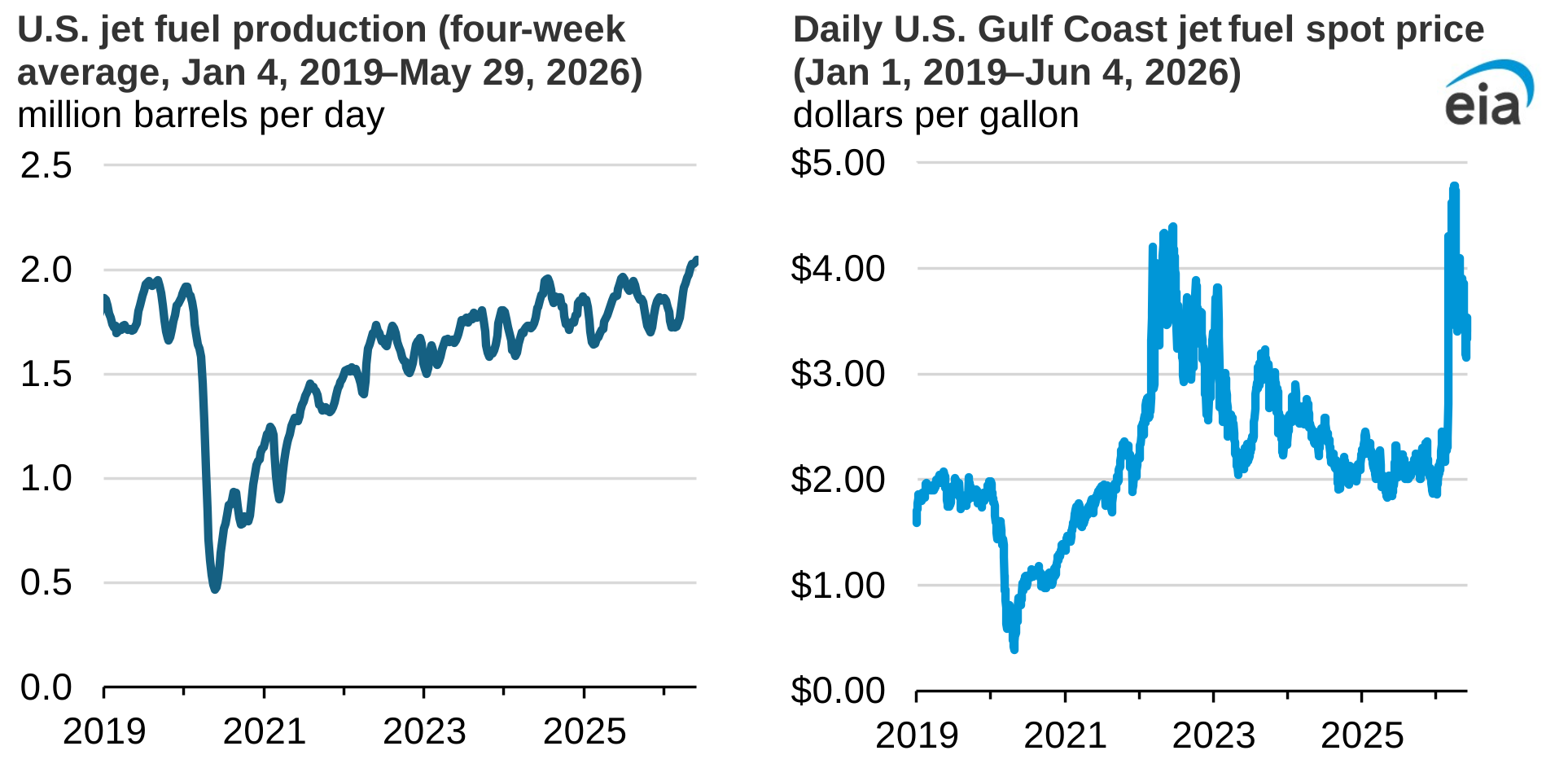
Weekly estimates suggest U.S. jet fuel production has increased to record highs in response to elevated jet fuel prices after the Strait of Hormuz closed on February 28. Higher crude oil prices and supply concerns, particularly in Europe and Asia, which previously imported much of their jet fuel supply from the Persian Gulf, have driven up jet fuel prices. Much of the increased U.S. jet fuel production is being exported, as domestic inventories remain above average.
Read More ›Tags: jet fuel, production/supply, spot prices, Gulf Coast
China’s nuclear power capacity nearly doubled since 2016

Note: IAEA data are used to identify capacity additions in 2025 and 2026, which we then add to our International Energy Statistics estimate for 2024 to get the total capacities for 2025 and 2026. All values are in reference unit power.
From 2016 to 2024, China’s nuclear generation capacity increased 76% (24 GW), based on our International Energy Statistics (IES) data. According to the International Atomic Energy Agency’s Power Reactor Information System (PRIS), China added an additional 1.1 GW of nuclear power capacity in 2025 and 2.2 GW in 2026 (through May). China is continuing to build out its nuclear generating capacity and has 36 reactors under construction, accounting for more than 49% of total world nuclear construction, according to PRIS.
Read More ›U.S. natural gas storage capacity increased slightly in 2025

Note: Measures of capacity reflect final revised values as published in the Underground Natural Gas Working Storage Capacity Report.
Underground working natural gas storage capacity in the Lower 48 states increased slightly in 2025, according to our latest data, with growth concentrated in the South Central and Mountain regions. Underground natural gas storage provides a source of energy when demand increases, balancing U.S. energy needs. We calculate natural gas storage capacity in two ways: demonstrated peak capacity and working gas design capacity. Both increased in 2025.
Read More ›Tags: natural gas, storage capacity
California natural gas prices reach historic lows in early 2026

Note: Prices are adjusted for inflation based on April 2026 Bureau of Labor Statistics’ Consumer Price Index. The SoCal Border Average represents a daily natural gas price index tracking spot prices at key delivery points into the Southern California Gas system.
Monthly average natural gas spot prices in California reached record lows in the first five months of 2026, dropping to values last recorded in the nationwide low-price market of 2024. Record lows were recorded in Northern California's PG&E Citygate and Southern California's SoCal Border Average; SoCal Citygate prices fell to near-record lows but remained higher than some 2024 prices. Several factors contribute to California’s low prices, including above-average inventories and decreasing in-state demand for natural gas-fired electricity.
Read More ›Tags: California, natural gas, prices
Natural gas for power generation flat this summer, record high expected in 2027
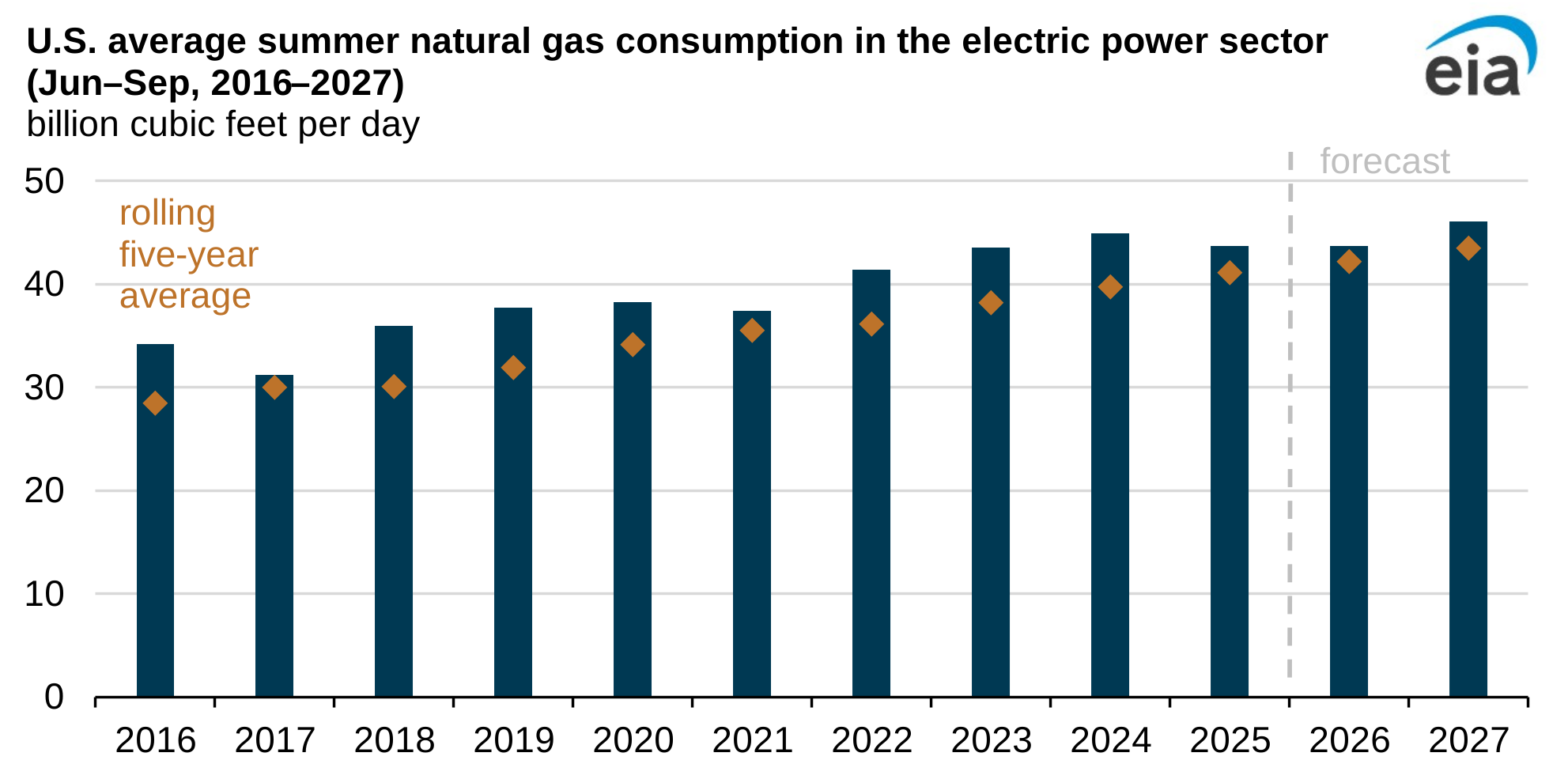
We forecast natural gas consumption by the U.S. electric power sector this summer will remain near recent highs and set a record next summer in our May Short-Term Energy Outlook (STEO). Despite a 2% increase in overall U.S. electricity demand this summer, we expect natural gas-fired electricity generation to be similar to last summer, primarily because of forecast increased generation from renewables. In the May STEO, we forecast natural gas consumed by the U.S. electric power sector will average 43.7 billion cubic feet per day (Bcf/d) during the summer (June–September), the same as in the summer of 2025, and 4% above the five-year summer average (2021–2025). We forecast natural gas consumption for power generation will increase 6% (2.4 Bcf/d) during the summer of 2027 to 46.1 Bcf/d, surpassing the previous record set in 2024 by 3%.
Read More ›The United States is a major energy exporter and importer, especially for petroleum
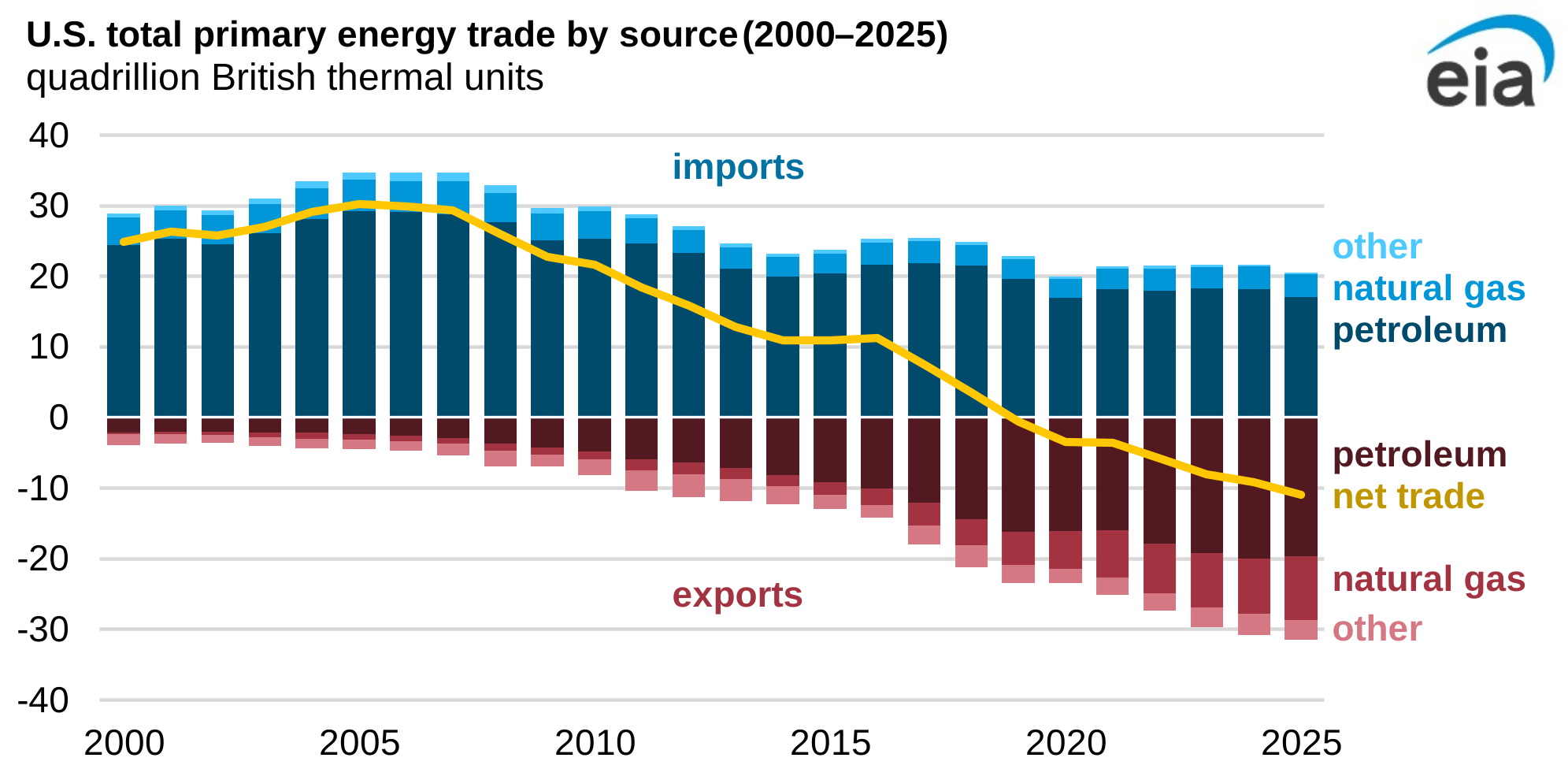
Data values: Primary Energy Imports by Source and Primary Energy Exports by Source
Note: Petroleum includes both crude oil and petroleum products, excluding biofuels. Other includes coal, coal coke, biomass, and electricity.
Total energy exports from the United States reached a record 31 quadrillion British thermal units (quads) in 2025, 2% more than the previous record set in 2024. U.S. energy imports were 21 quads, down 5% from 2024. Taken together, net trade—total imports less total exports—reached 11 quads of net exports in 2025, a record and 20% more net exports than the previous record set in 2024.
Read More ›Tags: oil/petroleum, exports/imports