
In 2020, 27% of U.S. households had difficulty meeting their energy needs
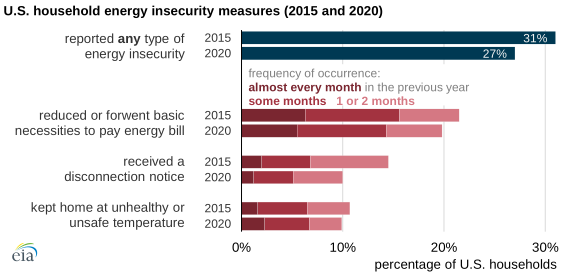
In 2020, 34 million U.S. households (27% of all U.S. households) reported difficulty paying energy bills or reported that they had kept their home at an unsafe temperature because of energy cost concerns. This estimate is less than what was reported in the previous iteration of the Residential Energy Consumption Survey (RECS), when 37 million households, or 31%, reported similar issues in 2015. The RECS measures household energy insecurity by asking a series of questions about challenges paying energy bills or conditions of unsafe temperatures attributable to energy cost concerns.
In addition to the overall reduction in U.S. household energy insecurity between 2015 and 2020, fewer households reported each of the components of energy insecurity as well. The largest reduction in a single component between 2015 and 2020 was in the percentage of households that reported receiving a disconnection notice, which decreased from 14% in 2015 to 10% in 2020. In response to the COVID-19 pandemic, many states issued moratoria on utility shutoffs for several months in late 2020.
The survey also captured how often these households dealt with particular energy challenges over the previous 12 months: almost every month, some months, 1 or 2 months, or never. Households receiving disconnection notices were more likely to experience that form of energy insecurity for only 1 or 2 months, while the other forms of energy insecurity were reported more frequently.
We also asked households if they were unable to use their heating or air-conditioning equipment because the equipment was broken and they could not afford to have it fixed or because they could not afford fuel. Five million households reported that they were unable to use their heating equipment, and 6 million reported that they were unable to use their air-conditioning. In 2020, 1.4 million households (1%) reported that someone in the household needed medical attention because their home was kept at an unsafe temperature.
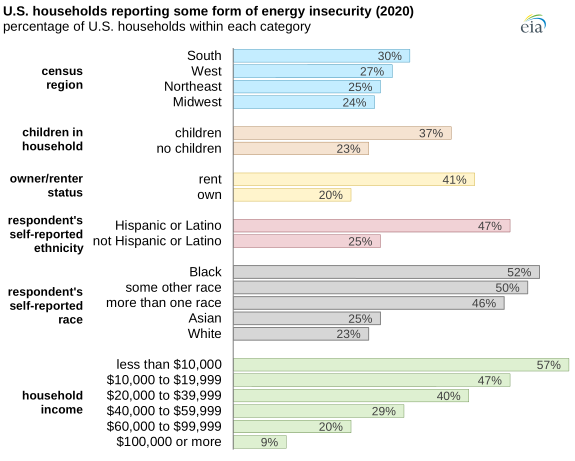
Certain demographic groups reported more instances of energy insecurity, including lower income households, households with children, and renters. Households where survey respondents self-identified as either Black or African American alone or as Hispanic or Latino reported higher rates of energy insecurity.
The 2020 RECS collected data on household energy use from 18,496 households, the largest responding sample in the program’s history. Respondents completed the survey using self-administered web or mail questionnaires during late 2020 and early 2021.
In addition to data on household energy insecurity, the initial 2020 RECS results include estimates of structural and geographic characteristics, electronics, appliances, lighting, and demographic characteristics. In the coming months, we will release estimates on additional topics and results with information for all 50 states and Washington, DC.
Principal contributors: Ross Beall, Carolyn Hronis