U.S. Energy Information Administration logo
Skip to sub-navigation

Oil and petroleum products explained  

What is crude oil and what are petroleum products?

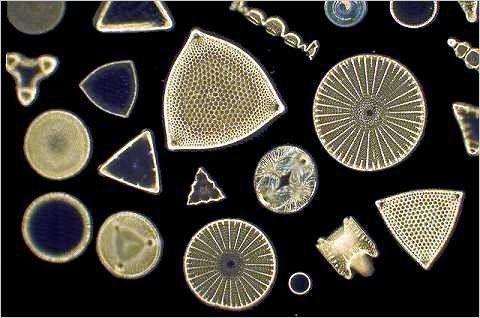
We call crude oil and petroleum fossil fuels because they are mixtures of hydrocarbons that formed from the remains of animals and plants (diatoms) that lived millions of years ago in a marine environment before dinosaurs existed. Over millions of years, the remains of these animals and plants were covered by layers of sand, silt, and rock. Heat and pressure from these layers turned the remains into what we now call crude oil or petroleum. The word petroleum means rock oil or oil from the earth.
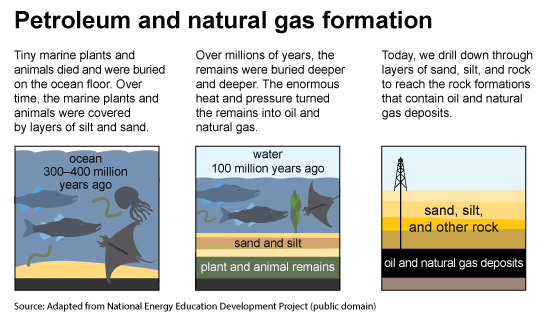
Three images,  about Petroleum & Natural Gas Formation. Adapted from the National Energy Education Development Project.
									The first image is about the Ocean 300 to 400 million years ago. Tiny sea plants and animals died and were buried on the ocean floor. Over time, they were covered by layers of sand and silt.
									The second image is about the Ocean 50 to 100 million years ago. Over millions of years, the remains were buried deeper and deeper. The enormous heat and pressure turned them into oil and gas.
									The third image is about Oil & Gas Deposits. Today, we drill down through layers of sand, silt, and rock to reach the rock formations that contain oil and gas deposits.

Source: U.S. Energy Information Administration (public domain)

Click to enlarge

Diatom image: Group of cleaned frustules

Diatoms magnified under a microscope.

Source: Image used by permission from Micrographia

Crude oil and other hydrocarbons exist in liquid or gaseous form in underground pools, or reservoirs, in tiny spaces within sedimentary rocks and near the earth's surface in tar (or oil) sands. Petroleum products are fuels made from crude oil and the hydrocarbons contained in natural gas. Petroleum products can also be made from coal, natural gas, and biomass.

What petroleum products are made from crude oil?

After crude oil is removed from the ground, it is sent to a refinery where different parts of the crude oil are separated into useable petroleum products.

A U.S. 42-gallon barrel of crude oil yields about 45 gallons of petroleum products in U.S. refineries because of refinery processing gain. This increase in volume is similar to what happens to popcorn when it is popped. A corn kernel is smaller and more dense than a popped kernel. The amount of individual products produced varies from month-to-month and year-to-year as refineries adjust production to meet market demand and to maximize profitability.
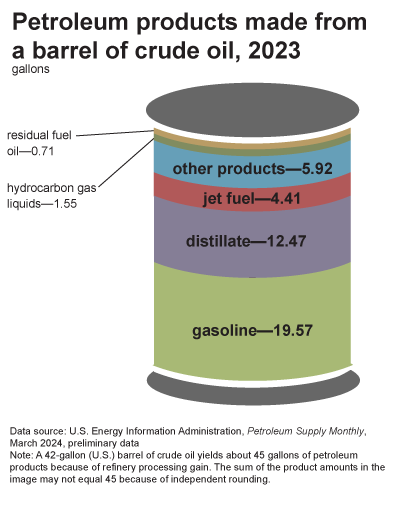
graphic illustration of a barrel to show the major products that are produced from refining a barrel of crude oil

Click to enlarge

Statistics
Analysis
Tools
Education
News

Petroleum & Other Liquids

Crude oil, gasoline, heating oil, diesel, propane, and other liquids including biofuels and natural gas liquids.

Natural Gas

Exploration and reserves, storage, imports and exports, production, prices, sales.

Electricity

Sales, revenue and prices, power plants, fuel use, stocks, generation, trade, demand & emissions.

Coal

Reserves, production, prices, employment and productivity, distribution, stocks, imports and exports.

Nuclear & Uranium

Uranium fuel, nuclear reactors, generation, spent fuel.

Renewable & Alternative Fuels

Includes hydropower, solar, wind, geothermal, biomass and ethanol.

EIA Survey Forms

Forms EIA uses to collect energy data including descriptions, links to survey instructions, and additional information.

Total Energy

Comprehensive data summaries, comparisons, analysis, and projections integrated across all energy sources.

U.S. States

State energy information, including overviews, rankings, data, and analyses.

International

International energy information, including overviews, rankings, data, and analyses.

Environment

Greenhouse gas data, voluntary reporting, electric power plant emissions.

Data Tools, Apps, & Maps

Tools to customize searches, view specific data sets, study detailed documentation, and access time-series data.

Open Data

EIA's free and open data available as API, Excel add-in, bulk files, and widgets

EIA Beta

Come test out some of the products still in development and let us know what you think!

Open Source Code

EIA's open source code, available on GitHub.

RSS Feeds

Subscribe to feeds for updates on EIA products including Today in Energy and What's New.