
New electric generating capacity in 2020 will come primarily from wind and solar
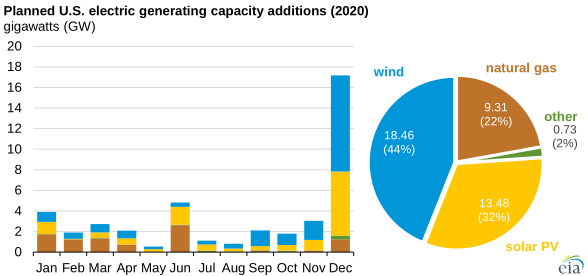
According to the U.S. Energy Information Administration’s (EIA) latest inventory of electric generators, EIA expects 42 gigawatts (GW) of new capacity additions to start commercial operation in 2020. Solar and wind represent almost 32 GW, or 76%, of these additions. Wind accounts for the largest share of these additions at 44%, followed by solar and natural gas at 32% and 22%, respectively. The remaining 2% comes from hydroelectric generators and battery storage.
Wind. Operators have scheduled 18.5 GW of wind capacity to come online in 2020, surpassing the record level of 13.2 GW set in 2012. More than 60%, or 11.2 GW, of wind capacity is scheduled to come online at the end of the year, in November and December of 2020, which is typical for solar and wind applications. Expiration of the U.S. production tax credit (PTC) at the end of 2020 is driving the large wind capacity addition. The phase-out of the PTC extension is also reflected in the amount of wind capacity additions that came online in 2019, which EIA expects will total 11.8 GW. Five states account for more than half of the 2020 planned wind capacity additions. Texas accounts for 32%; followed by Oklahoma at 6%; then Wyoming, Colorado, and Missouri at 5% each.
Solar photovoltaics. EIA expects 13.5 GW of solar capacity to come online in 2020, surpassing the previous annual record addition of 8 GW in 2016. More than half of the utility-scale electric power sector solar photovoltaic (PV) capacity additions will be in four states: Texas (22%), California (15%), Florida (11%), and South Carolina (10%). The residential and commercial sectors will also experience record growth as a result of new distributed PV or rooftop systems. According to its Short-Term Energy Outlook, EIA expects an additional 5.1 GW of small-scale solar PV capacity to enter service by the end of 2020.
Natural gas. Planned natural gas capacity additions for 2020 are 9.3 GW. Combined-cycle plants account for 6.7 GW and combustion-turbine plants account for 2.3 GW. More than 70% of these additions are in Pennsylvania, Texas, California, and Louisiana.
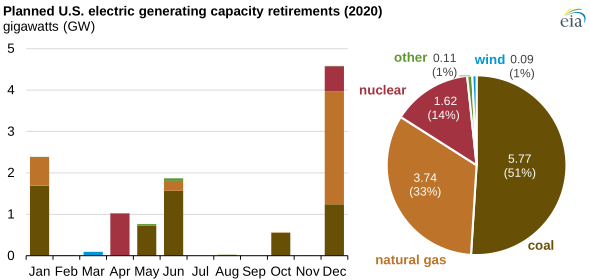
Scheduled capacity retirements (11 GW) for 2020 will primarily be driven by coal (51%), followed by natural gas (33%) and nuclear (14%). Other smaller renewable, petroleum, and hydro capacity account for the remaining 2% of 2020 retirements.
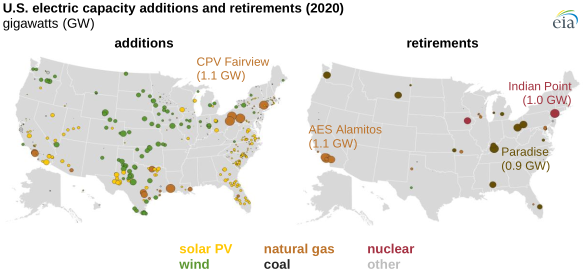
Coal. Of the 5.8 GW of coal-fired capacity that EIA expects to retire in 2020, half of the capacity is located in Kentucky and Ohio. The retirement of Unit 3 at the Paradise plant in Kentucky (0.97 GW) will be the largest coal-fired unit to retire in the United States this year. The next-largest retirements will be at Elmer Smith in Kentucky and at Conesville (Unit 4) and W H Sammis (Units 1–4) in Ohio.
Natural gas. Natural gas retirements will come primarily from older units that came online in the 1950s or 1960s. EIA expects natural gas retirements in 2020 to total 3.7 GW, and 68% of those retirements are steam turbine plants. Most of the retiring capacity, 2.2 GW, comes from Alamitos, Huntington Beach, and Redondo Beach AES plants in California. The Inland Empire Energy Center (a 10-year-old, 0.7 GW single-shaft combined-cycle plant) is also retiring because it has been operating below capacity for several years.
Nuclear. Two nuclear plants totaling 1.6 GW are currently scheduled to retire in 2020. Indian Point Unit 2, located in New York, is scheduled to retire in April. Iowa’s only nuclear power plant, Duane Arnold Energy Center, is scheduled to retire in December.
The utility-scale values in this article refer to capacity reported to EIA by developers and power plant owners—respondents to EIA’s annual and monthly electric generator surveys. In the annual survey, respondents are asked to provide planned online dates for any known generators coming online in the next five years. The monthly survey tracks the status of generators coming online in the coming year based on previous analysis of reported in-service dates.
Principal contributor: Suparna Ray
Tags: generation, coal, electricity, natural gas, nuclear, renewables, retirements, wind, solar, capacity, map